
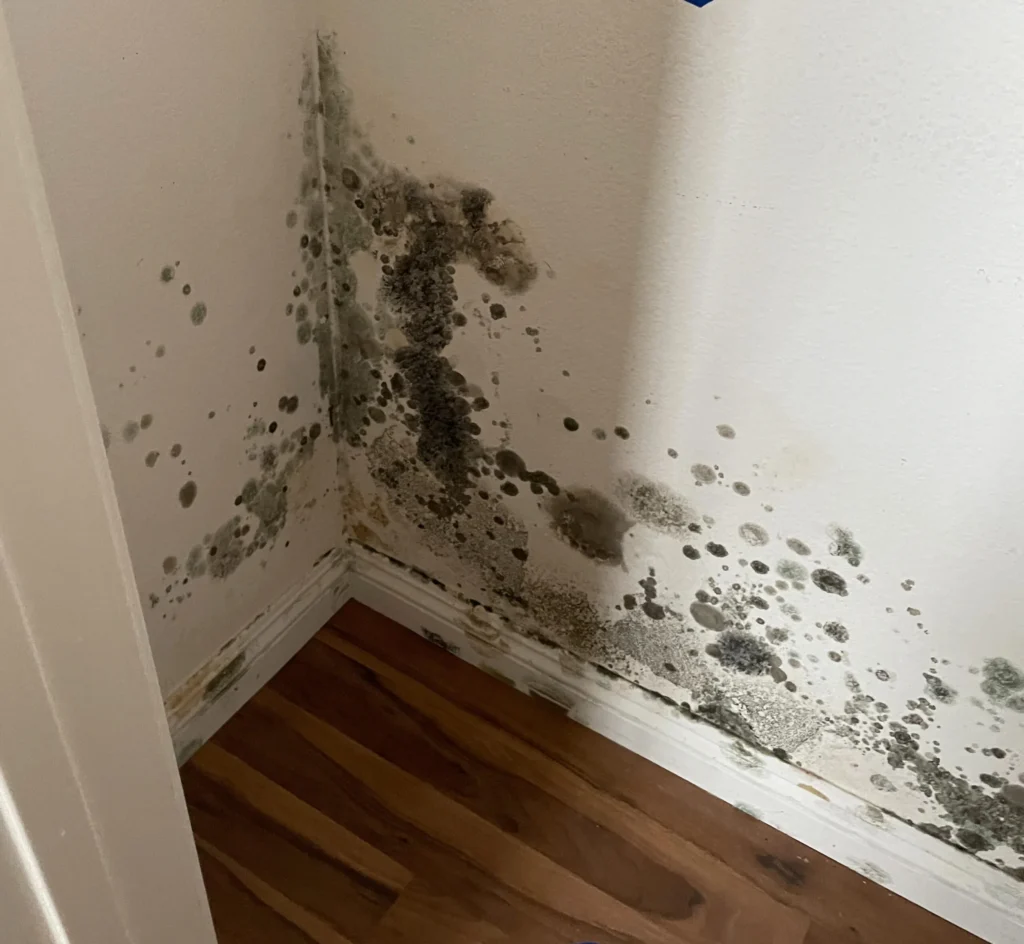
Mould after water damage can become visible weeks after a leak has been repaired, carpets have dried and walls appear normal. You might notice dark patches near skirting boards, discolouration on a ceiling or a persistent musty smell in a previously affected room.
Finding mould later does not necessarily mean it only started growing recently. Moisture may have remained inside wall cavities, beneath flooring or within insulation, allowing growth to develop before it became visible. A continuing leak or condensation problem may also be responsible.
At Trade Select Building Restoration, we investigate moisture sources and mould-affected materials to establish what treatment may be needed. Understanding why mould has appeared helps determine whether cleaning, further drying or professional remediation is appropriate for the property.
Why Mould Can Appear Weeks After a Leak
Mould needs moisture, suitable environmental conditions and a source of nutrients to grow. Many common building materials, including timber and paper-faced plasterboard, provide surfaces on which mould can develop.
After a leak or flood, conditions inside building cavities can differ considerably from those in the surrounding room. Exposed surfaces may dry while materials behind them remain damp, particularly where airflow is limited or moisture has travelled beyond the visibly affected area.
Residual Moisture Inside Building Materials
Water can travel along framing, pass through joints and collect in areas that are difficult to inspect. Carpet underlay, insulation and some flooring systems may retain moisture after visible water has been removed, making the extent of the damage harder to recognise.
Limited airflow within cavities can slow the drying process. A painted wall might feel dry while damp insulation or framing remains behind it, particularly when water has entered through a roof, plumbing connection or adjoining room.
Removing standing water is therefore different from drying the building materials that absorbed it. The water damage restoration process may involve extraction, controlled structural drying and moisture monitoring to address affected areas before repairs proceed.
Why Mould May Be Discovered Later
Mould can develop before it produces obvious staining or discolouration. Its first visible appearance does not establish exactly when growth began, and concealed contamination may remain unnoticed until it reaches an exposed surface or produces a persistent odour.
Moisture conditions may also have changed since the original incident. A plumbing connection could still be leaking, roof repairs may not have fully stopped water entry, or condensation could be contributing to dampness.
Finding mould several weeks later does not automatically establish that earlier restoration work was inadequate. However, it does warrant further investigation to determine whether moisture remains, another source of water is present or affected materials require additional treatment.
What to Do When Mould Reappears
If mould appears after earlier water damage, avoid assuming that cleaning the visible patch will resolve the problem. The immediate priority is to identify whether the affected area is still becoming damp and to avoid disturbing contamination unnecessarily.
The following steps can help you document the problem before arranging further assessment:
- Check for visible water entry. Look for renewed staining, plumbing leaks or condensation without opening walls or disturbing affected materials.
- Record the affected area. Photograph the growth and note when it appeared, whether it is spreading and whether a musty smell is present.
- Avoid disturbing extensive contamination. Do not dry-brush, sand or otherwise disturb mould-affected materials in a way that may disperse spores.
- Arrange further assessment where appropriate. Recurring growth, suspected concealed mould or extensive contamination may require professional investigation.
The Australian Government’s enHealth guidance on mould advises against dry-brushing mould and recommends professional assistance for extensive or recurring growth. These precautions are particularly relevant where mould affects porous building materials or areas that are difficult to access safely.
If the property has ongoing water entry, the relevant plumbing, roofing or building repairs will also need attention. Mould remediation cannot prevent recurring growth if the underlying moisture source remains unresolved.
Where Moisture Can Remain Hidden
Walls, ceilings and floors contain layers of materials that can conceal dampness long after their exposed surfaces appear dry. Some building assemblies restrict evaporation, while others contain cavities or absorbent materials that are difficult to assess through visual inspection alone.
The original water source and the building’s construction provide useful clues about where moisture may have travelled. Investigating these pathways helps determine whether the visible mould is an isolated surface issue or part of a wider moisture problem.
Behind Plasterboard, Skirting Boards and Cabinetry
Water can move behind skirting boards, collect near the base of internal walls or spread through cavities beyond the original leak. Moisture may remain in framing or insulation even when the surrounding painted surfaces show little evidence of damage.
Fixed cabinetry can make investigation more difficult, particularly in kitchens, bathrooms and laundries. Cupboards and built-in fittings may restrict access to affected wall surfaces, allowing damp materials to remain concealed.
Mould may eventually become visible around joints, fittings or the edges of finishes. A persistent musty smell can also warrant investigation, although odour alone cannot confirm the presence or location of hidden mould.
Under Flooring and Within Insulation
Floor coverings can conceal damp underlay, timber or substrates that have absorbed water during a leak or flood. Some flooring systems restrict evaporation, allowing moisture to remain beneath surfaces that no longer feel wet.
Insulation can present similar problems inside walls and ceilings. Its suitability for drying depends on its composition, condition, accessibility and whether it has been exposed to contaminated water.
The following table identifies common concealed moisture locations and the questions an assessment may need to answer.
| Area or material | Possible concern | What needs assessing |
| Behind plasterboard | Damp framing or insulation | Moisture conditions and material condition |
| Behind skirting boards | Water retained at wall bases | Adjacent materials and moisture movement |
| Beneath flooring | Damp underlay, timber or substrate | Retained moisture and suitability for drying |
| Within insulation | Moisture inside concealed cavities | Material condition, contamination and access |
| Behind cabinetry | Limited access to affected surfaces | Concealed dampness and possible mould growth |
A visual inspection alone may not establish the condition of these spaces. Depending on the findings, further moisture measurements or controlled access to concealed materials may be needed to understand the extent of the problem.
When Surface Cleaning Is Not Enough
Cleaning visible mould can improve the condition of a suitable surface, but it does not resolve an ongoing leak or contamination affecting materials that cannot be cleaned effectively. The treatment required depends on the surface, the extent of growth and whether moisture continues to affect the surrounding building materials.
A small patch on an accessible non-porous surface may require a different approach from mould affecting plasterboard, insulation or concealed framing. Where contamination extends into porous materials, cleaning the exposed surface may leave part of the problem untreated.
Why Mould May Return After Cleaning
Consider mould developing around a skirting board after a plumbing leak. Cleaning the exposed surface may remove visible growth, but damp plasterboard or flooring beneath it could remain untreated and continue to support fungal growth.
Similar conditions can occur when water continues entering through a roof or condensation repeatedly affects the same surface. In either situation, cleaning alone does not correct the underlying reason the material became damp.
The priority is to determine why the mould developed and whether the affected materials can be adequately cleaned and dried. The NSW Health mould factsheet advises that water-damaged materials should be completely cleaned and dried, with items that cannot be effectively treated discarded.
When Professional Mould Remediation May Be Needed
Professional remediation may be appropriate where mould is extensive, recurring, concealed or affecting materials that cannot be cleaned effectively. These situations can involve more than removing visible discolouration, particularly where contamination has entered porous surfaces or building cavities.
Depending on the conditions, treatment may involve containment, controlled cleaning, removing unsuitable materials and addressing the underlying moisture source. The sequence of work matters because disturbing contaminated materials or using inappropriate airflow can spread contamination into adjoining areas.
There is no single cleaning method suitable for every mould-affected material. An assessment should consider the type of surface, extent of contamination, water source and suitability of the materials for continued use.
Trade Select’s mould removal services include inspection, moisture-source identification and remediation support. Where water damage and mould contamination are connected, the work may also involve structural drying or other restoration measures.
How Hidden Moisture and Mould Are Investigated
When mould appears after an earlier leak or flood, the assessment needs to establish whether the original water source has been resolved and how far the problem extends. This involves examining affected materials, considering the building’s construction and identifying conditions that may allow contamination to continue developing.
At Trade Select Building Restoration, we investigate possible moisture pathways and the condition of affected materials before recommending treatment. The findings help determine whether the problem requires cleaning, mould remediation, further drying or additional investigation.
Moisture Mapping and Inspection
Moisture meters can help identify elevated readings in suitable building materials. It records those findings and provides a basis for investigating affected areas that may extend beyond the visible mould.
Thermal imaging may also highlight temperature differences that warrant closer inspection. However, it does not measure moisture directly or detect mould, so the results must be interpreted alongside material readings, observed conditions and the building’s construction.
The history of the water damage is important when deciding where to investigate. An earlier roof leak, plumbing failure or flooding incident may suggest different moisture pathways and concealed areas that require attention.
Deciding Between Drying, Cleaning and Material Removal
The appropriate treatment depends on whether moisture remains, the condition of the materials and the extent of mould contamination. Some surfaces may be cleaned effectively, while porous or deteriorated materials may need controlled removal.
Where structural drying is required, the drying method must account for any existing contamination. Uncontrolled air movement may be unsuitable when mould-affected materials are present, so the work needs to be planned around the conditions identified during assessment.
Some properties may require both water damage restoration and professional mould remediation. The sequence should address the moisture source, contamination risks and suitability of affected materials rather than treating drying and mould removal as unrelated tasks.
If mould has appeared after an earlier restoration project, contact Trade Select Building Restoration to discuss the affected area and whether further inspection is appropriate. Providing details about the original water damage and any previous treatment can help establish what needs investigating.
Preventing Mould From Returning After Treatment
Reducing the likelihood of recurring mould requires attention to the moisture conditions that supported its growth. Removing visible contamination is only part of the work if the same materials remain exposed to leaks, condensation or retained moisture.
The appropriate preventative measures depend on the original water source, the building’s condition and whether affected materials can remain in place. Effective follow-up should consider both the treatment completed and the conditions that may cause dampness to return.
Addressing the Original Moisture Source
A leaking pipe may require plumbing repairs, while a damaged roof may need further work to prevent water entering the building. Condensation can also contribute to dampness, particularly where ventilation is inadequate or moisture regularly collects on cool surfaces.
Australian public health guidance supports prompt action following water damage. South Eastern Sydney Local Health District advises that flood- or water-damaged surfaces should be cleaned and dried within 48 hours to help reduce the risk of mould.
This NSW Health mould prevention guidance is an early-response recommendation, not a claim that mould always begins growing after exactly 48 hours. It also does not mean that every material is safe to retain simply because cleaning or drying occurred within that period.
When mould has already appeared weeks after water damage, further investigation may be necessary to establish why the area remains damp. Correcting the source and assessing the affected materials are important parts of reducing the risk of further growth.
Checking Drying and Remediation Outcomes
After treatment, the affected area should be assessed to determine whether further cleaning, drying or repairs are required. Depending on the project, this may involve visual inspection, moisture measurements and other checks appropriate to the materials and extent of contamination.
Some remediation projects may also require independent post-remediation verification. The need for this depends on the conditions, project requirements and the parties responsible for assessing the completed work.
Moisture monitoring is particularly relevant where concealed materials have been affected. It helps establish whether suitable conditions have been reached before wall linings, flooring or other finishes are reinstated.
Mould After Water Damage FAQs
Can Mould Appear Weeks After Water Damage?
Yes. Mould may become visible weeks after a leak or flood, particularly where damp materials remain concealed or moisture continues to enter the building.
The later discovery does not establish exactly when growth began. An assessment can help identify whether retained moisture, a continuing leak or another dampness problem is responsible.
Does a Musty Smell Mean There Is Hidden Mould?
Not necessarily. A musty smell may indicate dampness or microbial activity, but it does not confirm concealed mould on its own.
Persistent odours after water damage can justify further investigation, particularly where affected materials are difficult to inspect. Moisture readings and an assessment of the property’s conditions can help establish what may be causing the smell.
Can Dehumidifiers Remove Mould?
No. Dehumidifiers reduce moisture in the air and can support structural drying, but they do not remove established mould contamination.
Cleaning, controlled removal or other remediation may also be required. The appropriate treatment depends on the affected materials and the extent of contamination.
Should Mouldy Plasterboard Always Be Replaced?
Not every situation requires the same treatment. However, plasterboard is porous, and material that is extensively contaminated, deteriorated or unsuitable for effective cleaning may need removal.
The decision should follow an assessment of the material and surrounding conditions. Surface appearance alone may not reveal contamination within concealed layers.
How Can I Reduce the Chance of Mould Returning?
Address the moisture source, investigate concealed dampness and arrange suitable cleaning or remediation where necessary. If the affected area contains materials that cannot be effectively restored, removal may form part of the treatment.
Ventilation and humidity control may help manage some damp conditions, but they do not replace repairing leaks or treating affected building materials. Follow-up assessment may also be appropriate where mould has previously returned.
Arrange a Mould and Moisture Assessment
If mould has appeared weeks after a leak, flood or other water damage incident, the next step is to establish why the affected area remains susceptible to dampness. An assessment can help identify whether moisture is still present, whether another leak has developed and which materials require treatment.
Trade Select Building Restoration provides moisture assessment, water damage restoration, structural drying and mould remediation services. We investigate affected materials and help determine which treatment measures are appropriate for the property’s condition.
Contact our mould removal team or call 1800 953 584 to discuss the affected property. Tell us when the original water damage occurred, where mould has appeared, whether the water source has been repaired and whether the growth has returned after cleaning.