 Skip to content
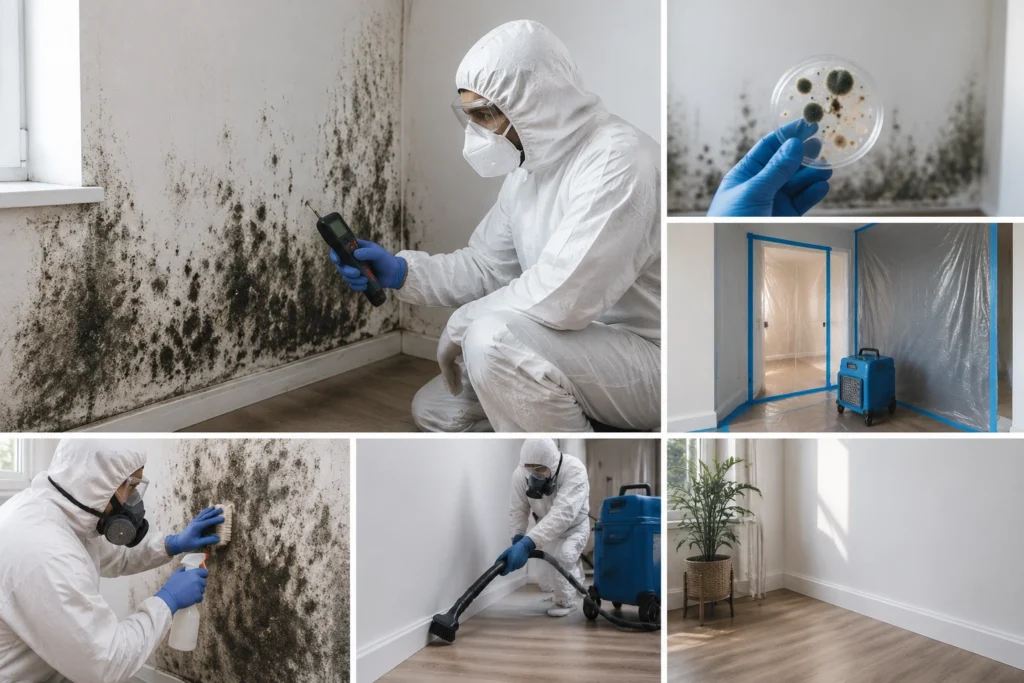
When mould keeps returning, the problem is often not that the property was never cleaned. The issue is that the response may have stopped before the underlying cause was addressed.
Surface cleaning can remove visible mould, but proper mould remediation looks deeper. It considers where moisture is coming from, how far contamination has spread, which materials are affected, how the area should be contained, and what needs to happen before the property is ready for clearance or reinstatement.
For homeowners, landlords and strata managers, this difference matters. If moisture problems remain unresolved or contaminated areas are not handled properly, mould can return, complaints can continue and disruption can last longer than expected.
Professional mould remediation involves a structured process that may include inspection, containment, air filtration, removal, drying, evaluation and post-remediation verification where required. Understanding that process helps property owners make better decisions when dealing with recurring mould problems.
Why mould keeps coming back after a clean-up
Visible mould is only one part of the problem. Mould growth is often connected to moisture issues such as leaks, flooding, storm damage, poor ventilation, condensation build-up or ongoing dampness.
Data cited by the Australian Institute of Health and Welfare shows that nearly 35% of people experienced problems with mould in their current Australian home in 2022. This highlights how common mould-related property issues are and why identifying the moisture source is a critical part of managing the problem.
A property may look cleaner after mould has been removed from visible surfaces, but that does not always mean the issue has been resolved. If moisture remains, hidden contamination is missed, or affected materials are not properly addressed, mould can return.
For landlords and strata managers, this can create ongoing challenges:
- repeated complaints from occupants
- disruption caused by further access requirements
- uncertainty about the correct next step
- additional remediation work that could have been reduced with a more complete assessment
The first priority in any mould problem is understanding why it developed and what conditions are allowing it to continue.
What proper mould remediation involves before removal begins
Before removal work starts, the affected area needs to be assessed properly.
A suitable inspection process looks at visible mould growth, moisture conditions, affected materials and possible contributing factors. Tools such as moisture meters, thermal cameras and sampling techniques may be used where required to help understand the scope of the problem.
This matters because mould is not always limited to what can be seen. Growth behind walls, around damaged materials or in areas affected by moisture may require a different approach from surface cleaning alone.
Containment is also an important part of the planning stage where required. Protecting unaffected areas and reducing the risk of cross contamination helps create a more controlled remediation environment.
The mould remediation process from containment to clearance
A professional mould remediation project should follow a structured sequence rather than relying on a quick clean-up approach.
The exact work required depends on the property and the level of contamination, but the process generally involves several stages:
| Stage | Purpose |
| Inspection and assessment | Identify visible mould, moisture issues, affected materials and contributing factors. |
| Containment | Reduce the risk of mould particles spreading into unaffected areas during works. |
| Air filtration | Help control airborne particulates during remediation where required. |
| Removal and cleaning | Remove affected materials and clean impacted areas within the approved scope. |
| Drying | Reduce remaining moisture after remediation works. |
| Evaluation and verification | Review the completed work and confirm whether the area is ready for the next stage. |
| Clearance | Confirm the site is suitable for re-occupancy or reinstatement works where applicable. |
The difference between cleaning mould and carrying out remediation is the level of control behind the process.
Cleaning may improve what is visible. Remediation focuses on managing the cause, contamination risk and recovery of the affected area.
What homeowners, landlords and strata managers should expect during remediation
A well-managed mould remediation project should provide clarity from the beginning.
The process normally starts with understanding the situation, assessing the property and determining the required scope of work. Once the approach has been agreed, remediation can move forward with the appropriate containment, removal, cleaning and drying stages.
During the work, property owners should expect that:
- access requirements may need to be organised
- containment areas or equipment may be used where necessary
- some affected materials may require removal
- drying and further cleaning may be required before completion
- visible mould removal alone does not always mean the problem is resolved
A structured approach helps everyone understand what is happening, why each step is required and what needs to happen before the area can be returned to normal use.
Why proper mould removal in Melbourne needs more than surface cleaning
The main challenge with mould removal is not simply removing what can be seen. The bigger issue is understanding why mould developed and whether the conditions that allowed it to grow have been addressed.
A successful remediation approach considers:
- the moisture source
- affected materials
- contamination risks
- containment requirements
- drying needs
- whether the area is ready for clearance
Without addressing these factors, mould may return after a temporary improvement.
For anyone searching for mould removal in Melbourne, the key question is not only whether visible mould can be removed. It is whether the process deals with the wider conditions that caused the problem in the first place.
Professional mould remediation aims to create a controlled path from assessment through to removal, drying and clearance where required.
When to book a mould inspection before remediation
Not every mould issue is immediately straightforward.
Sometimes visible growth clearly shows where the problem is. In other situations, the cause may not be obvious. There may be ongoing dampness, unusual odours, previous water damage or signs that mould has spread beyond what can be seen.
Inspection can help identify:
- visible mould growth
- moisture-related conditions
- possible hidden mould risks
- affected materials
- the appropriate remediation approach
Where the scope is uncertain, inspection before remediation can help prevent the work from being too narrow or missing contributing factors.
Starting with the right assessment gives property owners a clearer understanding of what needs to happen next.
Need mould removal in Melbourne? Start with the right remediation plan
When mould affects a home, rental property or managed building, the quickest-looking solution is not always the one that resolves the issue properly.
A structured remediation plan helps identify the cause, control the affected area, remove contamination and move the property towards clearance or reinstatement where required.
Trade Select provides mould inspection, removal and remediation support for residential, commercial and insurance-related properties. The next step is to discuss the situation, understand the scope and determine the appropriate approach.
If you need mould removal in Melbourne, start with a process that looks beyond visible mould and focuses on addressing the problem properly.
Frequently asked questions about mould remediation
What is the difference between mould cleaning and mould remediation?
Mould cleaning usually focuses on removing visible mould from surfaces. Mould remediation is a broader process that considers inspection, moisture conditions, containment where required, controlled removal, cleaning, drying and evaluation before clearance.
Do you need containment for every mould removal job?
Not every situation requires the same level of containment. The approach depends on the extent of the mould issue, the affected areas and the remediation requirements.
Where required, containment and filtration equipment can help reduce the risk of cross contamination during the work.
How do you know if mould has spread behind walls or ceilings?
Visible mould does not always show the full extent of a problem.
An inspection can help assess moisture conditions, affected materials and possible hidden risks. Tools such as moisture meters and thermal cameras may be used where required as part of the assessment process.
What happens after mould removal is completed?
The final stages of remediation may include drying, detailed cleaning, evaluation and post-remediation verification where required.
Clearance is determined based on the condition of the site and whether it is ready for the next stage, such as re-occupancy or reinstatement works.
Can mould return if the moisture source is not addressed?
Yes. If moisture conditions remain unresolved, mould can return.
That is why proper remediation focuses on understanding the cause of the mould problem rather than only removing visible growth.
When should I book a mould inspection first?
Inspection is useful when:
- the cause of mould is unclear
- visible mould does not match the level of concern
- the property has ongoing dampness
- there has been previous water damage
- a proper remediation plan is needed
