
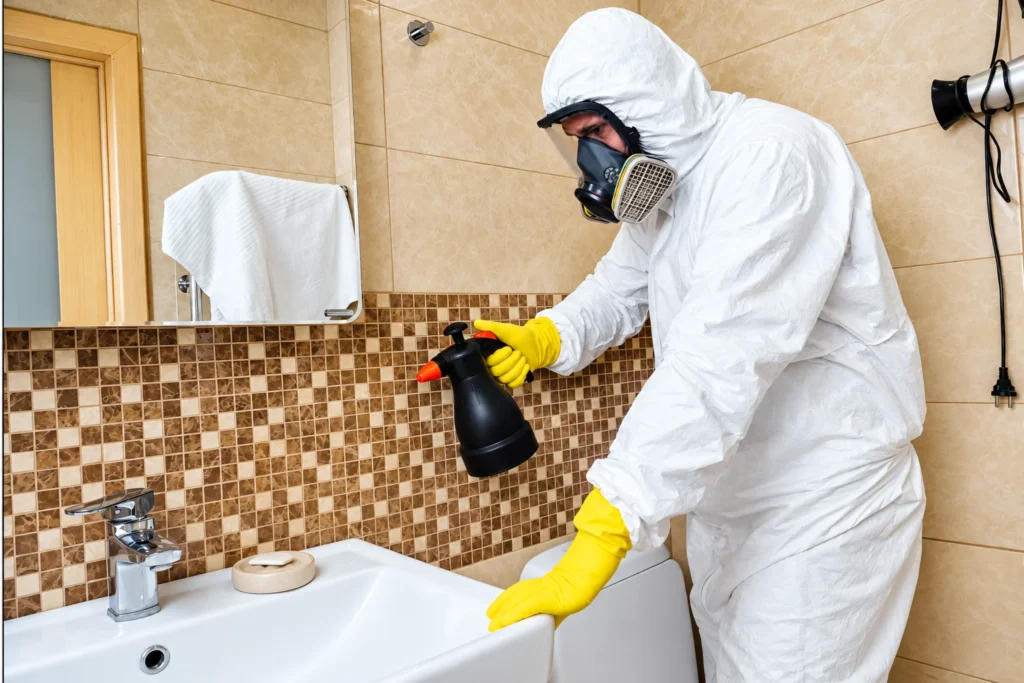
You clean the mould from the bathroom ceiling.
A few weeks later, the spotting starts again.
You scrub the grout, wipe down the walls, improve the airflow and try another bathroom mould treatment. The surface looks better for a while. Then the same patches return, or the affected area starts getting larger.
At that point, the issue is no longer simply how to clean the mould.
You need to understand what is allowing it to return.
Bathrooms naturally deal with high humidity, condensation and frequent water use. They can also hide plumbing leaks, damp wall cavities, moisture around showers and baths, damaged sealants, water-affected plasterboard and other conditions that support recurring mould.
A professional mould removal service becomes worth considering once repeated cleaning stops producing a lasting result, the affected area expands or moisture may be sitting behind the visible surface.
Stop Cleaning the Same Bathroom Mould and Start Looking for the Cause
Surface cleaning deals with what you can reach.
Recurring mould may point to conditions deeper within the bathroom.
Condensation is one possible contributor. Poor ventilation can allow moisture to remain on ceilings, walls and other surfaces for extended periods. Plumbing leaks, failed waterproofing, water ingress and damp building materials can create a different problem.
The visible mould does not tell you which cause is responsible.
That is why repeated cleaning can become frustrating. The same surface receives attention while the moisture condition supporting the growth remains.
Recurring Bathroom Mould Usually Gives You a Clue
Pay attention to the pattern.
Mould that repeatedly develops in one ceiling corner may suggest a local moisture or ventilation issue.
Growth around a wall adjacent to plumbing deserves a different line of investigation.
Mould spreading across several surfaces after water damage raises another set of questions.
The pattern does not provide a diagnosis by itself. It gives an inspector a sensible place to start.
| What you notice | What it may suggest | What it does not prove |
| Mould keeps returning in the same area | A moisture condition may still be present | The exact source of the moisture |
| Growth is spreading across more surfaces | The affected area may be broader than first thought | That full remediation is automatically required |
| Mould appears near plumbing | A localised moisture source may warrant investigation | That a plumbing leak is definitely present |
| Paint, plasterboard or finishes are damaged | Moisture may be affecting building materials | The full extent of the damage |
| Mould returns after cleaning and better airflow | Another moisture source may need investigation | That hidden mould is definitely present |
For homeowners, landlords and property managers, this distinction can help avoid repeated cleaning without understanding what is driving the problem.
Small Surface Growth and a Restoration Problem Require Different Responses
A small patch of surface mould with an obvious moisture cause may be manageable through routine cleaning and better moisture control.
A bathroom with recurring growth, widespread contamination, water-damaged materials or suspected moisture behind the walls presents a different problem.
The response should reflect the condition of the building rather than the appearance of a single patch on cleaning day.
Routine Bathroom Mould Cleaning Has a Limit
Bathroom mould cleaning can improve the appearance of affected tiles, grout and other accessible surfaces.
Dampness behind painted plasterboard may remain undetected.
Moisture levels within a wall cavity cannot be accurately mapped through surface observation alone.
The extent of water migration beyond visible areas may also remain unclear.
Once those questions become relevant, professional assessment provides more useful information than another round of surface treatment.
These Signs Suggest Bathroom Mould Removal Needs Professional Assessment
There is no fixed number of times you should clean a bathroom before calling someone.
The behaviour of the mould provides better guidance.
According to the Western Australian Department of Health’s Guidelines for Managing Mould and Dampness, mould covering more than 1 square metre is considered an indicator of complex contamination. The guidelines also identify recurring mould, persistent dampness and suspected hidden contamination as reasons for closer assessment. This means even a smaller bathroom mould problem may warrant professional investigation if it repeatedly returns or the moisture source remains unresolved.
The Mould Returns Soon After Cleaning
Repeated regrowth suggests the conditions supporting mould may still be present.
That could involve continuing condensation, poor ventilation, a leak or moisture held within building materials.
Cleaning removes the visible growth for a period, while the underlying condition may remain unchanged.
A mould inspection can help assess those contributing factors before a larger removal scope is decided.
The Affected Area Is Getting Larger
Growth that spreads across ceilings, walls, corners, skirting or other materials deserves closer attention.
Larger affected areas can make containment and controlled removal more relevant, particularly if porous building materials have been affected.
Trade Select Building Restoration’s mould-remediation work can include assessment and planning, containment, removal, deconstruction where required, structural cleaning, HEPA filtration, content assessment and post-remediation evaluation.
The exact scope depends on what is found at the property.
Suspected Mould Behind Walls or Ceilings Changes the Job
Bathrooms contain plenty of places where moisture can travel without remaining visible.
Water can affect materials behind showers, around plumbing penetrations, beneath flooring, above ceilings and inside wall cavities.
A musty smell may raise suspicion. Peeling paint, staining, swollen materials or persistent dampness may add further clues.
Those signs still need investigation before conclusions are drawn.
An Inspection Can Check the Moisture Conditions You Cannot See
Trade Select’s inspection process can involve moisture meters and thermal imaging to help investigate moisture conditions around affected areas.
Sampling may also be used where required.
Thermal imaging can help identify temperature patterns that deserve further assessment. Moisture meters can then provide readings from suspect materials and surrounding areas.
Together with physical inspection and the history of the property, those findings help define the problem more clearly.
That information can then guide the scope of any bathroom mould removal service.
Professional Bathroom Mould Removal Goes Further Than Surface Treatment
Professional remediation is a controlled restoration process.
The work begins by understanding the affected area, the materials involved and the moisture conditions supporting the growth.
The findings determine what happens next.
Assessment Comes Before Removal
An initial assessment helps establish the visible extent of mould and whether additional investigation is required.
Moisture readings and inspection findings can support decisions about cleaning, material removal, drying and other restoration work.
For landlords, strata managers and real estate professionals, this stage can also provide a clearer basis for discussing access, repair responsibilities and the scope of works with other parties.
Containment and Remediation Control the Affected Area
Larger or more involved mould-remediation work may require containment to reduce movement of contamination into unaffected areas.
Trade Select’s documented service scope includes make-safe and containment measures, HEPA filtration, physical removal of affected material, structural cleaning and decontamination, deconstruction where required, odour treatment and post-remediation evaluation.
Water-damaged porous materials may sometimes require removal if effective decontamination is not practical.
Drying and moisture-source management may also form part of the wider restoration plan.
A professional bathroom mould treatment therefore depends on the condition of the property. A fixed cleaning method cannot suit every bathroom.
Delaying the Investigation Can Mean Repeating the Same Work
If the same mould keeps returning, another round of cleaning may simply restart the cycle.
The ceiling gets cleaned again. The grout is treated again. The room may even be repainted.
If the moisture condition remains, the signs can return.
Ongoing dampness can also affect plasterboard, flooring, cabinetry and other materials.
A professional assessment can help establish whether you are dealing with a manageable surface problem or a restoration issue that requires a broader response.
That gives you a better basis for deciding what work should happen next and in what order.
Choose the Next Step Based on What the Bathroom Is Telling You
A small, isolated patch with a resolved moisture cause may remain a cleaning and maintenance issue.
Recurring mould deserves more investigation.
Widespread growth deserves more investigation.
Suspected moisture behind a wall, ceiling or other finished surface also deserves closer assessment.
These are the situations where a professional service can provide information that ordinary bathroom cleaning cannot.
Arrange Professional Help Once the Problem Moves Beyond Routine Cleaning
Trade Select Building Restoration provides mould inspection and mould-remediation services for residential and managed properties.
Our process can include inspection, moisture assessment, remediation planning, containment, removal, structural cleaning and verification according to the conditions found at the property.
If your bathroom mould keeps returning, is spreading across a larger area or may be associated with hidden moisture, consider arranging an assessment before committing to another round of cleaning.
Visit our Mould Removal page for more information, or review our Mould Inspection service if the source and extent are still unclear.
To discuss the next step for your property, contact Trade Select Building Restoration.
Before You Book a Bathroom Mould Removal Service, Get Clear on These Questions
Can I remove bathroom mould myself?
Small amounts of accessible surface mould may sometimes be managed through cleaning once the moisture condition has been addressed.
Recurring growth, larger affected areas, water-damaged materials or suspected concealed moisture justify professional assessment.
How many times should I clean mould before calling someone?
There is no fixed number.
Recurrence gives you more useful information than the cleaning count.
Mould that repeatedly returns suggests the supporting conditions still need attention.
Does recurring ceiling mould mean there is a leak?
A leak is one possibility.
Condensation, ventilation problems and other moisture conditions can also contribute to ceiling mould.
Inspection findings are needed to distinguish between likely causes.
What if I think mould is behind the bathroom wall?
Surface cleaning cannot assess a concealed cavity.
A mould inspection can use visual evidence, moisture readings and thermal imaging where appropriate to investigate conditions around the suspect area and determine whether further investigation is needed.
Will professional bathroom mould treatment guarantee it never comes back?
No responsible remediation process can guarantee that mould will never recur.
Long-term results depend heavily on controlling the moisture conditions that allowed growth to develop.
How much does professional bathroom mould removal cost?
A reliable fixed figure cannot be given without assessing the property.
The scope can change according to the affected area, materials involved, moisture conditions, containment requirements, drying needs and whether damaged materials require removal.
Should a landlord or strata manager arrange an inspection before approving removal?
An inspection can be useful if the source, extent or affected materials are uncertain.
Clearer findings can help define the scope before removal, drying or repairs are commissioned.