
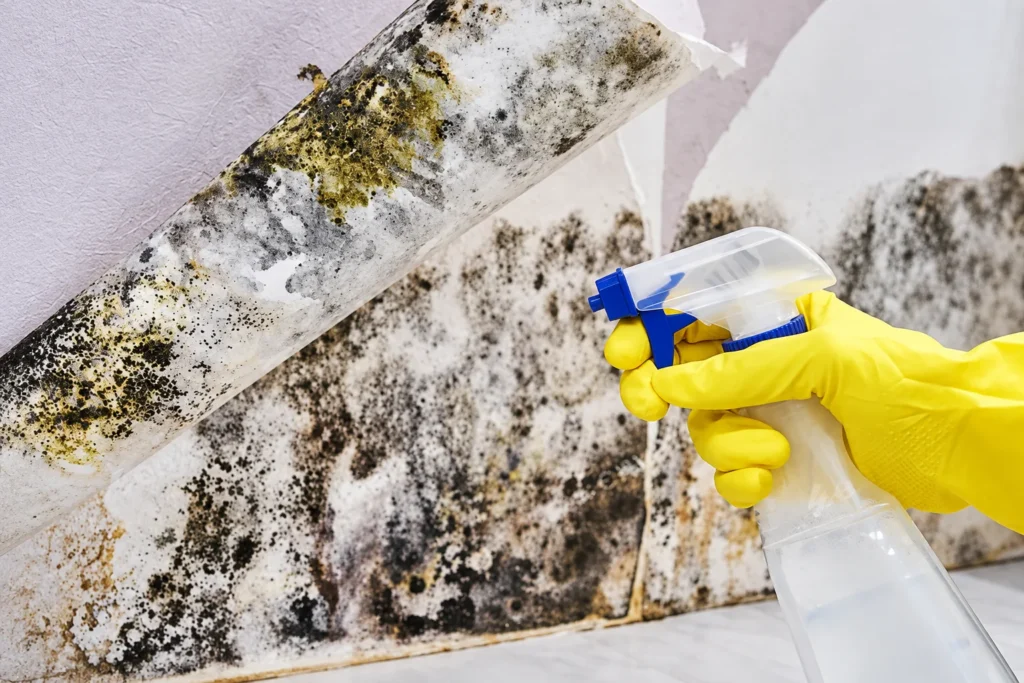
Mould detection Melbourne services can help investigate recurring mould, persistent damp smells and signs of hidden moisture that are not obvious from the surface.
You clean a patch of mould from a wall. The surface looks fine again.
Then it returns.
Another property may have a different problem. There is a persistent musty smell, a history of water ingress or a room that always feels damp, yet no obvious mould growth explains it.
These situations are difficult because the visible surface only shows what can be seen at that moment. Moisture may remain inside building materials, behind wall linings, beneath flooring or around wet areas long after the original leak or water event.
Professional mould detection in Melbourne treats the property as an investigation rather than assuming the visible mould is the whole problem.
Visual inspection can be combined with moisture readings, humidity measurements, thermal imaging and targeted assessment of areas that warrant closer attention.
At Trade Select Building Restoration, our mould inspection process considers visible mould, moisture conditions and likely contributing factors so the next step can be based on the conditions found at the property.
Why Recurring Mould Needs Investigation
Repeated surface growth raises an obvious question: why does the same area keep developing mould?
Moisture is often part of the answer.
A plumbing leak may be involved. Roof water entry, condensation, high humidity, poor ventilation or damp building materials can also create conditions that support mould growth.
According to the Australian Institute of Health and Welfare, the Australian Housing Conditions Dataset found that nearly 35% of people experienced problems with mould in their current home in 2022. This highlights how widespread household mould problems can be across Australia and reinforces the value of investigating moisture conditions when mould persists or returns after cleaning.
Sometimes the source is obvious. In other properties, the clues are less clear.
A wall might feel dry by hand while moisture remains deeper within the material. A bathroom ceiling may be cleaned regularly while condensation continues to form. A previous leak may have been repaired while nearby building materials remain damp.
Cleaning visible mould does not establish which of these conditions is present.
Hidden mould detection and moisture investigation can help determine whether the visible growth is a local surface issue or part of a wider moisture problem.
Hidden Problems Can Sit Beyond the Finished Surface
Concealed dampness can occur in wall cavities, beneath flooring, inside cabinetry, around wet areas, above ceilings and in other moisture-prone parts of a building.
A damp smell does not prove mould is growing inside a cavity.
Recurring surface mould does not prove it either.
Both signs can justify further assessment.
This helps avoid two assumptions: that everything is fine because no mould is visible, or that concealed mould must be present simply because a room smells damp.
How a Mould Inspection Works
A professional inspection begins with the building itself.
Visible mould, staining, discolouration, damaged finishes, condensation and water marks can all provide clues. Damp surfaces, musty odours and evidence of previous water damage add further context.
Our mould inspections may cover walls, ceilings, floors, cavities, bathrooms, laundries, roof spaces and other areas associated with moisture, depending on the property and the concerns being investigated.
The history of the property also matters.
Has the property flooded? Was there a roof leak several months ago? Does the mould return after heavy rain? Is the problem concentrated around a bathroom, laundry or external wall? Has flooring recently been affected by water?
These details can help determine where closer assessment may be useful.
Visual inspection provides the starting point. Instrument readings can then help identify whether a suspected moisture problem extends beyond what can be seen.
How Moisture Meters Help
One limitation of visual inspection is simple: building materials can contain moisture without looking visibly wet.
Moisture meters provide additional information.
During moisture detection in Melbourne, meters may be used to assess moisture levels in affected or suspect materials. Hygrometers can also provide information about relative humidity and surrounding environmental conditions.
At Trade Select, these tools form part of mould inspection and moisture-mapping work where the property conditions call for them.
A reading still needs to be interpreted in context.
One isolated number cannot explain the condition of an entire building. The technician needs to consider the material being assessed, how nearby areas compare, whether there is a known water event and whether other observations support the reading.
| Investigation method | What it can help show | What it does not establish on its own |
| Visual inspection | Visible mould, staining, condensation, water marks and damaged finishes | Conditions hidden behind finished surfaces |
| Moisture meters | Moisture readings in suspect or affected materials | The full cause or extent of the problem from one reading |
| Hygrometers | Relative humidity and environmental conditions | Whether concealed mould is present |
| Thermal imaging | Surface temperature patterns that may warrant further investigation | Mould behind a wall or a final moisture diagnosis |
| Moisture mapping | The distribution and extent of recorded moisture across affected areas | The complete restoration response without wider assessment |
A stain may suggest a possible water path. A moisture reading adds information about the material. Humidity measurements provide environmental context. Further readings can help show whether the concern is concentrated in one location or extends across a larger area.
This gives property owners, building managers and insurers more useful information than a visual impression alone.
What Thermal Imaging Can Show
Thermal imaging is often misunderstood in mould investigations.
A thermal camera does not see mould through a wall.
It measures surface temperature differences.
Those differences can reveal patterns that deserve closer examination. Evaporative cooling, differences in insulation, building geometry, air movement and concealed moisture can all influence thermal patterns, so an image needs to be interpreted in the context of the building.
Trade Select uses thermal imaging where appropriate to identify temperature variations that may indicate concealed moisture behind walls, ceilings or other materials.
Suspected areas can then be checked using moisture readings and physical inspection.
A Thermal Image Is a Lead, Not a Final Diagnosis
Suppose a thermal image shows a cooler area running down part of an internal wall.
That pattern may justify further assessment.
The next question is whether moisture readings support the suspicion.
If they do, there is stronger evidence of a damp area. If they do not, another building condition may be producing the temperature variation.
This distinction reduces the risk of treating a thermal image as proof of something it cannot establish on its own.
For building managers and insurance professionals, combining thermal patterns with moisture readings and inspection observations can support clearer restoration decisions.
Targeted Inspection Connects the Readings to the Building
Inspection equipment provides measurements, but those readings need to be considered alongside the building and its water history.
A technician may focus on wet areas, previously damaged sections, roof spaces, floor systems, cabinetry, wall cavities or known plumbing and water-entry points.
For example, recurring mould at the bottom of a wall may warrant moisture readings across the surrounding area, particularly if there has been a nearby plumbing issue.
A different property may have a musty odour across several rooms after flooding. In that situation, a broader moisture assessment may be more useful than concentrating on one visible area.
This is also where moisture mapping can support the investigation.
How Moisture Mapping Defines the Affected Area
Moisture mapping takes the investigation beyond an isolated reading.
Trade Select’s process uses tools including moisture meters, thermal imaging cameras and hygrometers to measure and document moisture across affected areas.
Readings can then be recorded to develop a clearer picture of the location and extent of water intrusion.
That wider view can influence restoration planning.
A property owner may believe one section of flooring is affected while moisture readings indicate that a larger area needs assessment.
A building manager may need documentation showing which rooms or materials require drying.
An insurer may require clearer information about the extent of moisture before the next stage of work is scoped.
Moisture mapping can support these decisions.
It can also provide a baseline for monitoring. If structural drying is undertaken, later readings can be compared with earlier measurements to assess how conditions are changing.
The purpose is practical: identify affected areas, document what is found and use that information to guide the next stage.
What Happens After Moisture Is Found
Mould detection should help clarify the next step rather than assume a treatment before the property has been properly assessed.
The appropriate response depends on the conditions found.
Some properties may need improved ventilation and further monitoring. Others may require drying, mould removal, repairs, material replacement or additional investigation.
For example, mould around a poorly ventilated wet area presents a different restoration problem from mould associated with water-damaged plasterboard after a roof leak.
A property with moisture inside wall or floor materials may need structural drying before other restoration work progresses.
Trade Select’s mould inspection process can also produce recommendations covering moisture control, ventilation improvements, drying, mould removal or further investigation according to the findings.
Inspection Can Support Restoration Planning
Clear findings can support different stakeholders in different ways.
A homeowner may want to understand what is contributing to a recurring problem.
A building manager may need to identify the likely extent of affected areas, plan access and manage disruption to occupants.
An insurance professional may need moisture evidence, inspection observations and recommendations to help clarify the restoration scope.
A structured assessment can provide a clearer picture of the property for each of these decisions.
Stop Repeatedly Cleaning the Symptom and Investigate the Building
Recurring mould, persistent damp odours and unexplained moisture are reasons to look beyond the visible surface.
A professional mould inspection can combine visual evidence, moisture measurements, humidity readings, thermal imaging and targeted assessment to build a clearer picture of the conditions at the property.
That does not mean every stain leads to extensive restoration.
It means the next decision can be based on evidence.
Consider arranging a professional mould inspection if you are dealing with recurring mould, musty odours, water staining, previous leaks, condensation or concerns about hidden dampness.
Trade Select Building Restoration can assess the affected area and provide recommendations based on the conditions found.
If you need to discuss suspected hidden moisture or mould in a Melbourne property, contact Trade Select Building Restoration to determine the appropriate next step.
Mould Detection FAQs
Can mould be present even if I cannot see it?
Yes.
Mould can develop in concealed or difficult-to-view areas such as behind wall linings, beneath flooring, inside cabinetry and around moisture-prone building elements.
A musty smell, water history or recurring surface growth can justify further investigation, although none of those signs alone confirms hidden mould.
Can thermal imaging detect mould through walls?
No.
Thermal imaging measures surface temperature variations.
Those patterns may identify an area that warrants moisture testing, but the camera does not directly identify mould behind the surface.
A technician may use moisture meters and other inspection findings to assess whether a thermal anomaly is associated with damp building materials.
What is the difference between a mould inspection and moisture mapping?
A mould inspection considers visible mould, suspected concealed growth, moisture conditions and possible contributing factors.
Moisture mapping focuses more closely on measuring and documenting moisture across affected areas.
It can help define the extent of water intrusion and provide information for drying, restoration planning and ongoing monitoring.
Why does mould sometimes return after cleaning?
Cleaning can remove growth from a surface while the conditions supporting it remain.
Leaks, condensation, high humidity, water ingress, damp materials and restricted ventilation may all contribute to recurrence.
An inspection can help determine which of those conditions may be present at the property.
Does every mould inspection require air sampling?
No.
Air sampling may be used where the circumstances call for it, including situations where mould is suspected without obvious visible growth or where further assessment is required.
The inspection method should be selected according to the property, the evidence already available and the question that needs to be answered.
What happens if hidden moisture is found?
The next step depends on the source, material, location and extent of the moisture.
Possible responses include monitoring, moisture control, structural drying, mould removal, material replacement, ventilation changes, repairs or further investigation.
The inspection findings help determine which response fits the property.
Can moisture investigation help building managers and insurers?
Yes.
Recorded moisture readings, mapped affected areas and inspection observations can provide clearer information for restoration planning and reporting.
This can assist building managers who need to plan access and works, as well as insurers and other stakeholders assessing the extent of damage and the next stage of restoration.