
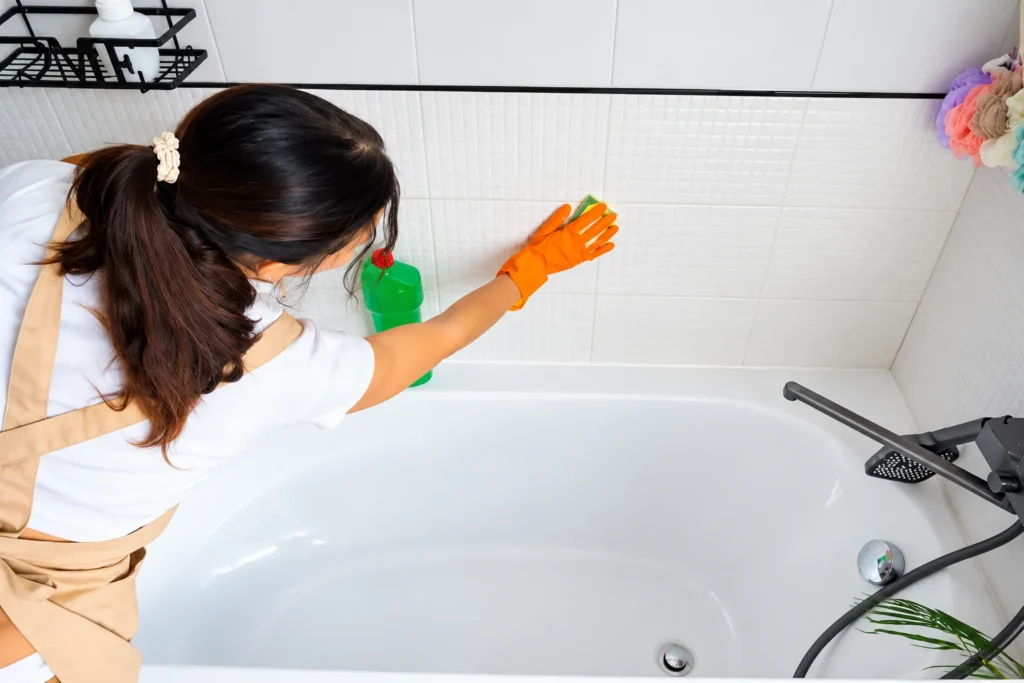
Prevent bathroom mould returning by focusing on what happens after removal, not just how the bathroom looks immediately afterwards.
Once the visible mould has been treated, check four things:
- Is the bathroom drying properly after normal use?
- Is condensation still collecting on walls or ceilings?
- Does the same area remain damp or show new staining?
- Could a leak, water ingress or wet building material still be involved?
If the bathroom is simply staying damp after showers, improved ventilation and moisture control may be the next step.
If mould returns in the same area despite better drying, or if you notice staining, damaged finishes or unexplained dampness, closer investigation may be warranted.
Where building materials remain wet, structural drying or repairs may need to happen before the area is fully reinstated.
The goal is not to apply every service. It is to identify what is keeping the area damp and address that condition before the same mould cycle starts again.
Control the Moisture That Contributed to the Mould
Removing mould and controlling the conditions that supported its growth are separate parts of the restoration process.
If the bathroom continues to experience excessive moisture, the same conditions can return. Repeating the treatment without addressing the cause can leave the property owner dealing with the same cycle.
The most useful question after removal is simple:
What was keeping this area damp?
Bathroom Mould Can Return After Removal
Bathroom mould can return if moisture continues accumulating around the affected area.
Condensation is one possible contributor. Poor ventilation can allow moisture to remain in the room. Plumbing leaks, water ingress and damp building materials can create different moisture problems.
These causes should not be treated as interchangeable.
A bathroom that stays damp after normal use may need a different response from a wall affected by a concealed plumbing problem.
The visible mould does not establish which situation applies.
Match the Prevention Plan to the Moisture Source
If condensation and poor ventilation are contributing, improving how the room manages moisture may reduce the conditions that supported mould growth.
Water is entering through a leak, ventilation will not repair it.
If materials remain damp after water damage, airflow may form only one part of the response. Assessment and controlled drying may also need to be considered.
| What is happening | What may need attention | What it does not automatically mean |
| The bathroom stays damp after showers | Ventilation, airflow and moisture control | That there is definitely a leak |
| Mould returns in the same localised area | A continuing moisture source may need investigation | That full remediation is always required |
| Water staining or damaged finishes appear | The affected area may need moisture assessment | That the source can be identified by appearance alone |
| Materials remain damp after a leak | Structural drying may need consideration | That every bathroom needs drying equipment |
| Mould returns despite improved ventilation | Another moisture source may need investigation | That hidden mould is definitely present |
The aim is to address the property condition connected to the mould rather than simply repeating the treatment.
Check Whether the Bathroom Is Drying Properly
Bathrooms regularly produce moisture.
The key question is how effectively that moisture clears after use.
Persistent condensation and poor ventilation can contribute to mould problems. After removal, pay attention to whether the bathroom continues staying damp for extended periods.
Look at how the room behaves during normal use.
Does moisture continue collecting on the ceiling or walls?
Does the bathroom remain humid long after showers?
Are the same surfaces repeatedly damp?
Those observations can help show whether moisture management still needs attention.
How Ventilation Helps After Mould Removal
Ventilation helps move moisture out of the bathroom.
After mould removal, its role is to reduce the amount of moisture that remains in the room and on surrounding surfaces.
A bathroom can have an exhaust system and still show recurring moisture conditions.
The useful question is whether the room is drying effectively.
If condensation repeatedly remains on ceilings, walls or other surfaces, ventilation and moisture conditions deserve closer attention.
For landlords and property managers, this provides something practical to monitor after treatment. Instead of judging success only by whether visible mould reappears, you can also watch whether the room continues producing the same damp conditions that existed before removal.
Investigate Further if Mould Returns Despite Better Ventilation
If improved moisture control changes the problem, that gives you useful information.
If mould continues returning in the same area, the picture is different.
Recurring growth alongside staining, damaged materials or unexplained dampness can justify investigation for another moisture source.
Repeated treatment becomes less useful when the cause of the dampness remains unclear.
Recurring Bathroom Mould Can Point to Hidden Moisture or Water Ingress
Hidden moisture can be difficult to judge from appearance alone.
A wall may contain a localised damp area associated with plumbing. A ceiling may show water staining. Materials affected by an earlier leak may still require assessment.
These signs do not identify the cause by themselves.
They provide a reason to investigate.
Our mould inspection work focuses on identifying the presence, source and extent of mould contamination. Moisture investigation can also form part of the wider assessment by considering the affected materials and surrounding conditions.
When a Mould Inspection Makes Sense
A mould inspection is worth considering when the problem has returned and the source remains unclear.
Investigation may also be useful where there is persistent dampness, visible water staining, deteriorating materials, previous water damage or a suspected leak.
Our documented diagnostic capabilities include moisture meters, hygrometers and thermal imaging as part of moisture assessment and mapping where appropriate.
The findings may point towards moisture control and ventilation. They may also identify a reason to consider drying, repairs or further remediation.
Do Not Repair Over Building Materials That Are Still Damp
Stopping a leak does not automatically mean every affected material is dry.
Building materials can retain moisture after the original source has been repaired.
According to NSW Health’s mould prevention guidance, water-damaged surfaces and materials should be cleaned and dried within 48 hours to help prevent mould growth. This recommendation highlights the importance of addressing water damage promptly and assessing whether moisture remains within affected building materials before restoration or repairs proceed.
If moisture remains, it should be considered before restoration moves forward.
This is particularly relevant where the bathroom has experienced water intrusion beyond normal condensation.
Hidden Bathroom Moisture May Need Structural Drying
Structural drying is designed to remove moisture from building materials.
Trade Select’s restoration services include controlled drying using professional drying equipment, with moisture readings used to track conditions during the process.
That provides a clearer basis for deciding when affected materials have been adequately addressed.
Structural drying is not a standard requirement after every bathroom mould treatment.
It applies where the property assessment identifies moisture in building materials that needs to be managed.
A clean surface and a dry building material are not necessarily the same thing.
Repair the Water Source Before It Recreates the Problem
Some bathroom mould problems lead back to a building defect or water source that requires repair.
The mould is one part of the outcome.
The water path needs its own response.
That may involve plumbing work, repair of water-affected building elements or restoration after damaged materials have been removed and dried.
Plumbing Leaks, Water Ingress and Damaged Materials Need Their Own Response
A plumbing leak needs to be repaired as a plumbing problem.
Water-damaged building material needs to be assessed according to its condition.
A ventilation issue requires attention to the way moisture is managed in the room.
Treating all three situations with the same mould product would leave the underlying property conditions unresolved.
Our broader restoration capability includes repair and maintenance work following restoration. This allows the recovery process to extend beyond mould removal where damaged building elements require further work.
The sequence matters: identify the source, address the moisture, complete the required remediation or drying, then move into repairs where needed.
Bathroom Repairs Should Follow Moisture Findings
Repairing finishes too early can make the affected area harder to monitor.
If there is reason to believe building materials still contain moisture, assessment should inform the timing of reinstatement work.
This does not mean every bathroom needs extensive testing after mould removal.
It means repairs should reflect the actual condition of the property.
Our restoration work uses moisture assessment and mapping as diagnostic tools where water damage is involved. Those findings can help inform restoration planning rather than relying only on surface appearance.
Watch How the Bathroom Behaves After Removal
The period after treatment can provide useful information.
You are looking for signs that the moisture problem may still be active rather than waiting only for visible mould to return.
Persistent condensation is one clue.
Continuing dampness is another.
New staining, deteriorating finishes or a musty odour can also justify a closer look.
These observations should be treated as signals for investigation, not proof of a particular defect.
Signs the Moisture Problem May Still Be Active
Pay attention to patterns.
If the room repeatedly stays damp after normal bathroom use, moisture control may still need attention.
One wall or ceiling area remains affected regardless of how the bathroom is used, another source may need investigation.
Materials show new staining or deterioration after a previous water event, their condition should be assessed before the issue is dismissed as a surface mould problem.
For landlords and property managers, documenting these changes can help build a clearer history of what is happening at the property.
That history may be useful when deciding whether the next action involves ventilation work, mould inspection, moisture assessment, drying or repair.
Choose the Next Step Based on What Is Keeping the Bathroom Wet
There is no single prevention method that suits every bathroom.
The next step should match the moisture source.
Ventilation Improvements May Be Enough in Some Bathrooms
Ventilation deserves attention where the moisture pattern is closely linked to normal bathroom use and persistent condensation.
Better moisture control may be the appropriate response where there is no evidence of another water source and the room is simply staying damp for too long.
Continue observing how the area behaves after those conditions change.
If the mould does not return and the surfaces dry more effectively, that provides useful evidence that the moisture-management problem has improved.
Inspection, Drying or Repairs May Be the Better Next Step
Another pathway is needed when the moisture cannot be explained by normal bathroom use.
Recurring mould in the same location, localised water staining, suspected plumbing problems, damp building materials or a history of water ingress can justify professional investigation.
If moisture is found within building materials, drying may need to occur before repairs.
A leak or damaged building component is identified, repairing that source becomes part of reducing recurrence.
If the assessment identifies mould contamination requiring a controlled remediation scope, further mould removal and remediation may be appropriate.
Protect the Result of Bathroom Mould Removal With a Moisture Plan
Removing mould is only one part of reducing the chance of the same problem returning.
After treatment, the priority is to understand how moisture will be controlled.
In some bathrooms, that means improving ventilation and drying.
In others, it may mean investigating a leak, assessing damp materials or completing repairs after drying.
Trade Select Building Restoration can connect mould inspection, moisture assessment, structural drying, remediation and repair planning where the property requires those services.
The aim is not to apply every service to every bathroom.
It is to match the response to the conditions found at the property.
If the Bathroom Keeps Getting Damp, Find the Cause Before Repeating Treatment
Recurring bathroom mould is a moisture warning worth investigating.
If mould has already been removed, start by watching how the room dries and whether condensation continues building up.
If the area remains damp despite improved moisture control, look further.
A leak needs to be identified and repaired. Damp building materials may need assessment and drying. Recurring mould may justify an inspection to establish whether the problem extends beyond the surface.
We can assess the mould and moisture conditions, identify the restoration pathway supported by the findings and coordinate relevant mould removal, drying or repair work where required.
If you want to prevent bathroom mould returning, contact Trade Select Building Restoration to discuss the property and the next practical step.
Bathroom Mould After Removal FAQs
Why can bathroom mould come back after professional removal?
Mould can return if the moisture conditions that supported growth develop again.
Condensation, poor ventilation, leaks, water ingress or damp building materials can all require consideration depending on the property.
Recurrence is a reason to investigate the moisture conditions rather than automatically repeating the same treatment.
Does improving bathroom ventilation prevent mould from returning?
Improved ventilation can help where condensation and poor airflow are contributing to the moisture problem.
It will not repair a plumbing leak or remove moisture already retained inside affected building materials.
The prevention method needs to match the source identified at the property.
How can I tell whether my bathroom is staying too damp after mould removal?
Look for persistent condensation, slow-drying surfaces, continuing dampness, new water staining, musty odours or deterioration around previously affected materials.
These signs can support further investigation, although they do not identify the moisture source on their own.
Should I arrange another mould inspection if the mould returns?
An inspection can be appropriate when mould returns and the reason remains unclear.
It is especially useful where the property also has unexplained dampness, previous water damage, staining, damaged materials or a suspected leak.
The inspection helps establish what may be contributing to recurrence before another treatment scope is selected.
Can bathroom walls still be wet after a leak has been repaired?
Yes.
Repairing the source stops additional water entering from that particular defect, but materials already affected may still contain moisture.
Moisture assessment can help determine whether further drying should be considered before restoration or repair work proceeds.
Should bathroom repairs happen immediately after mould removal?
The timing depends on the condition of the affected materials.
Where moisture is still present, assessment or structural drying may need to occur before reinstatement.
Repair planning should follow the property findings rather than the appearance of the exposed surface alone.
What should I do if bathroom mould treatment keeps working only temporarily?
Repeated recurrence suggests the surrounding moisture conditions need closer attention.
We can investigate the mould, moisture and affected building materials and then recommend whether the next step should involve moisture control, inspection, structural drying, repairs or further remediation.