 Skip to content
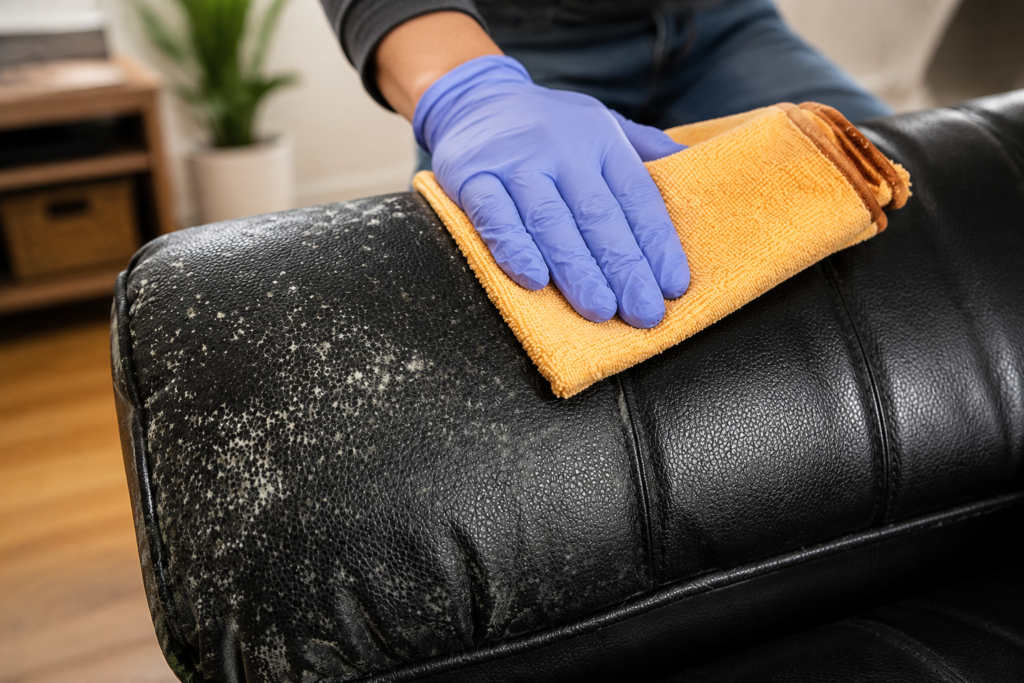
A cracked leather sofa, water-marked chair or smoke-affected piece of furniture can look as though replacement is inevitable.
Appearance alone does not answer that question.
The condition needs to be assessed in context. Leather type, surface finish, staining, contamination, colour loss and structural damage can all influence whether further restoration is worth investigating. Previous cleaning attempts can change that assessment again.
At Trade Select Building Restoration, our documented capability is broader contents restoration rather than a standalone specialist leather restoration service. Our contents work involves assessing affected items, determining their condition and considering appropriate cleaning, drying, restoration or replacement pathways after property damage.
That distinction gives us a sensible starting point for leather furniture affected by water, fire, smoke or other loss events.
The first decision is whether the item still has a realistic recovery path.
The First Question Is What Has Actually Been Damaged
“Damaged leather” can describe several different conditions.
One item may have a visible stain while remaining otherwise sound. Another may have faded areas. A third may have cracking, splitting or deterioration that extends beyond the surface appearance.
Those conditions should not automatically be grouped together.
A useful assessment considers the leather surface, its finish, the extent of the damage and the condition of the furniture or item underneath it. If the problem followed a water or fire event, the wider loss conditions also need to be considered.
This is particularly relevant for contents restoration because the item may have been exposed to more than one source of damage.
A chair affected during a water loss may have visible marks on the leather while moisture has also reached cushioning or other internal components. Furniture involved in a fire loss may have smoke, soot, odour or water exposure alongside visible surface damage.
One photograph rarely answers all of those questions.
Cracking Can Range From Surface Wear to Material Failure
Cracking is one of the main reasons people investigate leather furniture restoration.
The useful question is how far that cracking goes.
An assessment should look at whether the visible deterioration appears confined to the surface or whether the material is splitting more deeply. Seams, joins and areas that carry repeated load deserve attention because deterioration there can affect the practicality of repair.
The surrounding condition also helps.
A limited damaged area on an otherwise sound item presents a different decision from widespread deterioration across multiple panels. Damage that extends into the structure of the furniture creates another level of complexity.
We would therefore avoid judging repairability from the presence of cracks alone.
The item needs to be considered as a whole.
This approach also prevents repair costs from being considered in isolation. A visually obvious defect may be relatively contained, while a less dramatic-looking item could have broader deterioration that affects whether restoration is commercially sensible.
Fading Needs to Be Separated From General Soiling
A leather surface that looks dull or uneven has not necessarily suffered one simple type of damage.
The appearance may involve surface soiling, wear, colour change, damage to the finish or a combination of conditions.
That difference affects the decision.
Cleaning is intended to address removable contamination. Colour loss is a different issue. Structural deterioration is different again.
The supplied business sources do not establish a dedicated Trade Select leather recolouring process, so we do not present recolouring as a service we automatically perform. A colour-related issue would first need to be assessed so the condition can be identified and an appropriate next step considered.
This is especially useful for higher-value furniture and commercial seating.
Replacing a piece because it looks faded may be premature if the issue is primarily surface contamination. Assuming that all colour loss can be corrected would be equally premature.
Assessment comes first.
Leather Stain Removal Depends on the Condition You Start With
A stain gives the eye something obvious to focus on.
The treatment decision still depends on more than the mark itself.
The source of the stain, how long it has been present, the condition of the finish and previous cleaning attempts can all influence the starting point. Odour or wider contamination may also need to be considered in contents affected by a property loss.
If you are considering leather stain removal, useful information includes what caused the mark, if known, and what has already been applied to it.
That history can help distinguish the original staining from changes created by later cleaning.
Repeated scrubbing or experimentation with several cleaning products can also make the condition harder to evaluate. The visible area may no longer represent only the original stain.
For that reason, valuable leather items are better assessed before a persistent mark is subjected to repeated treatment.
The objective is to understand what remains recoverable.
Water Exposure Can Affect More Than the Visible Leather
Leather furniture involved in a water-damage event deserves a broader inspection than its outer surface alone.
Water can affect other parts of an item, depending on the extent and duration of exposure. Cushioning, internal materials, backing and the furniture structure may also need consideration.
Our wider contents-restoration work is designed around this type of assessment. Trade Select’s documented services include contents assessment and restoration for items affected by water or fire, with processes that can involve inventory, drying, cleaning, deodorising and storage where required.
That broader view is useful because successful surface cleaning does not by itself establish the condition of everything inside the item.
The loss history provides context as well.
A small localised exposure is different from furniture that has been involved in a substantial water event. The degree of contamination, material condition and recoverability need to be considered before an item is classified as suitable for further restoration work.
Australian flood-recovery guidance shows why the source of the water matters. Hinchinbrook Shire Council advises that upholstered furniture inundated by floodwater is rarely recoverable and may need to be disposed of. This does not mean every water-affected leather item requires replacement, but it highlights why flood contamination, internal materials and the extent of exposure need to be assessed before a restoration decision is made.
For homeowners, the question may be whether a valued sofa is worth saving.
For an insurer or loss adjuster, the question may be whether the item has a reasonable restoration pathway compared with replacement.
The assessment supports both decisions.
Fire, Smoke and Odour Add Another Layer to the Assessment
Leather contents affected by fire may present several conditions at once.
Visible soot is one possibility. Smoke residue and odour can also affect contents, and firefighting activity may introduce water into the same loss.
Trade Select’s broader fire and contents restoration services address smoke, soot, odour and affected belongings as part of property recovery. The available company material also recognises that some contents can be cleaned or restored while other items may require specialist treatment or replacement.
That is the appropriate framework for assessing leather furniture after a fire.
We first need to understand the damage.
A piece that appears structurally sound could still require assessment for contamination and odour. Another may have direct heat damage or deterioration that changes its recoverability.
The visible leather is therefore one part of the decision.
Previous Cleaning Attempts Become Part of the Damage History
People naturally try to save a valued item before contacting a restoration provider.
The difficulty appears once several treatments have been attempted and the surface begins to change.
A cleaner may leave residue. Repeated rubbing may alter the appearance. A stain may lighten while the surrounding finish changes. Another product may affect texture or colour.
The supplied material does not document specific chemical reactions for leather, so we do not make assumptions about what a particular household product has done without examining the item.
We would, however, want to know what has been used.
Keep the product name if you still have it. Note roughly how often the area was cleaned and whether the leather changed afterwards.
That information can be useful during assessment.
If a surface is already changing, continuing with trial-and-error cleaning may reduce the information available about the original condition.
Restoration Is Worth Investigating When the Item Still Has a Sound Core
The economics of restoration depend on the individual item.
A high-value piece of furniture may justify further assessment even if treatment is more involved. Commercial furniture can create replacement, matching and operational considerations. An insurance loss may require a documented decision about whether an item is restorable.
Several factors can support further investigation.
The damage may be limited to a particular area. The furniture may remain structurally sound. The item may have a high replacement value or be difficult to match. The main concern may involve contamination, staining or surface condition rather than widespread physical failure.
None of those factors guarantees successful restoration.
They help determine whether specialist assessment is worth pursuing.
This is where a leather restoration service search often becomes a broader recoverability question.
The customer needs to know whether further treatment is justified before money is committed to either restoration or replacement.
Replacement Can Be the More Practical Outcome
Restoration should not be treated as the correct outcome for every damaged item.
Extensive splitting, widespread material deterioration, severe contamination or damage to the furniture structure can change the calculation.
Cost also needs to be considered.
A treatment process that approaches or exceeds the practical replacement value of an item may make little commercial sense unless the item has other value that the owner wishes to preserve.
Insurance-related decisions can add further requirements around documentation and recoverability.
The useful outcome is therefore an informed decision, even if that decision is replacement.
Trying to save every damaged item can consume time and cost without producing a satisfactory result.
Writing off potentially recoverable contents too early can create the opposite problem.
An assessment helps establish the middle ground.
Insurers and Commercial Clients Need a Recoverability Decision
Contents restoration can become a substantial project after a larger water or fire loss.
There may be furniture, equipment, stock and personal property spread across multiple rooms or commercial areas. Each category can require assessment and documentation.
Trade Select’s broader contents-restoration capability includes item assessment, inventory and documentation, cleaning, drying, deodorisation and storage support where required.
Leather furniture can sit within that process.
For insurers, loss adjusters and commercial clients, the question is usually wider than whether one stain can be removed.
They may need to know which items appear recoverable, which require specialist treatment and which may need replacement.
That classification helps organise the loss.
It also avoids treating an entire collection of contents as though every item has the same material, value and damage profile.
Leather seating in a commercial venue, for example, may warrant an individual assessment because replacement could involve matching multiple pieces or disrupting the appearance of the space.
The decision is still based on condition and recoverability.
What We Check Before Recommending the Next Step
Our approach starts with the item and the circumstances of the damage.
For leather furniture or other leather contents, an assessment would consider the visible condition and the wider loss history before a recommendation is made.
A practical review may include:
- Identifying the item and the leather type or finish where this can be established.
- Confirming how the damage occurred.
- Looking at cracking, splitting, staining, fading and texture changes.
- Considering water, smoke, soot, odour or other contamination where relevant.
- Recording previous cleaning or treatment attempts.
- Checking whether damage extends beyond the visible surface.
- Considering the condition and recoverability of the complete item.
- Deciding whether further restoration, specialist referral or replacement should be investigated.
This is an assessment framework.
It is not a claim that Trade Select performs every specialist leather repair technique. The supplied business material establishes broader contents restoration rather than a dedicated specialist leather service.
That distinction keeps the recommendation tied to the actual scope we can support.
Seven Questions to Answer Before Repairing or Replacing Leather
Can cracked leather furniture be restored?
Sometimes further restoration may be worth investigating. The decision depends on how extensive the cracking is, whether the leather itself is splitting and whether the furniture remains structurally sound. Widespread material deterioration can make replacement more practical.
Can faded leather be restored?
Fading first needs to be distinguished from general soiling, wear or deterioration of the finish. The supplied Trade Select material does not document a dedicated leather recolouring process, so we would assess the condition before suggesting a restoration pathway.
Can stains be removed from leather?
Some stains may be suitable for treatment, although the outcome depends on the condition of the leather, its finish, the staining substance and previous cleaning. A persistent stain should be assessed before stronger or repeated treatment is attempted.
What happens to leather furniture after water damage?
Water-affected leather furniture can be considered as part of a wider contents-restoration assessment. We assess affected contents and can coordinate cleaning, drying and restoration decisions based on the condition of the items and the wider property loss.
Can smoke-damaged leather furniture be saved?
Some smoke or fire-affected contents may be recoverable, while others may need specialist treatment or replacement. Soot, odour, water exposure, direct damage and the condition of the item all influence the decision.
Is leather restoration cheaper than replacement?
There is no universal answer. Item condition, replacement value, the extent of damage and the type of specialist work required can all affect the comparison. The supplied materials do not provide leather-specific pricing, so an item assessment is needed before cost expectations can be set.
Does Trade Select provide a dedicated leather restoration service?
Our current source material does not establish a standalone Trade Select leather restoration service. We do provide broader contents restoration for belongings affected by water, fire and other property-damage events, which includes assessment of item condition and recoverability.
Assess the Item Before You Write It Off
Cracking, fading, staining and water exposure can make a leather item look ready for replacement.
The decision deserves more than a visual first impression.
Leather type, finish, contamination, colour change, previous cleaning and structural condition can all influence whether further restoration is worth investigating. The wider loss matters as well, especially after water or fire damage.
At Trade Select Building Restoration, we can assess damaged contents within our broader restoration process and help establish whether an item appears suitable for cleaning or restoration, requires specialist consideration or is more realistically treated as a replacement decision.
If leather furniture or other contents have been affected as part of a property-damage event, visit our Contents Restoration service or contact us to discuss the loss and the next practical step.
