
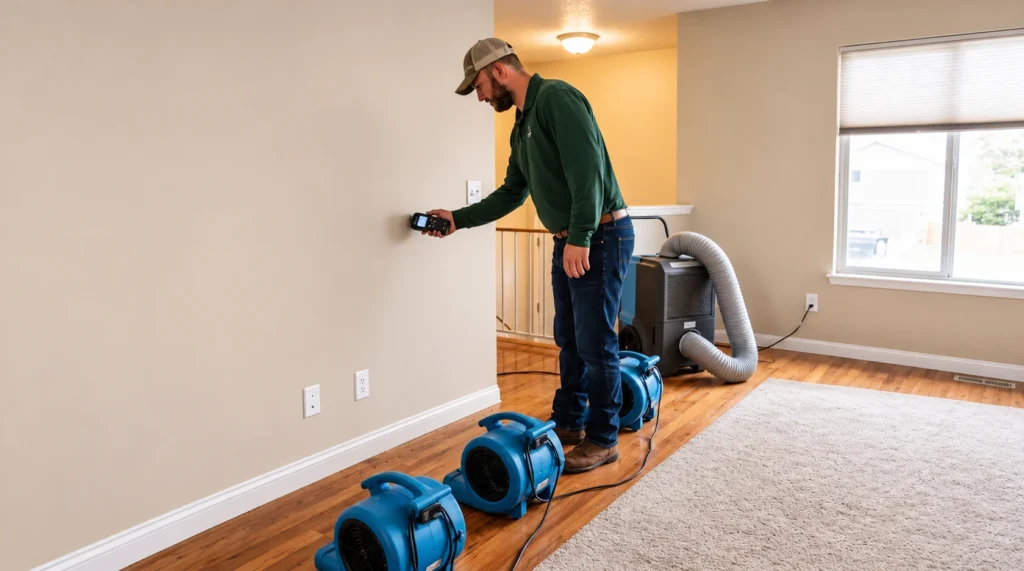
Water damage repair should begin with deciding what can safely remain in the building, what needs replacing and which areas must be dried before repairs proceed. A stained ceiling might need little more than repainting, but only if the underlying materials are sound and no unresolved moisture remains above it.
The same principle applies to swollen skirting boards, damaged plasterboard and wet flooring. Replacing visible finishes before checking the materials behind or beneath them can lead to further deterioration and repeat repair work.
At Trade Select Building Restoration, we assess water-affected materials and moisture conditions before recommending restoration and reinstatement work. The aim is to establish a repair scope based on the property’s condition, rather than relying on what the damage looks like from the surface.
Why Repairs Can Fail When Moisture Remains
Visible damage does not always show the full extent of a leak. Water may travel through wall joints, floor layers and ceiling cavities before staining or swelling becomes obvious.
A successful repair therefore depends on confirming what has happened to the building materials, not simply replacing the damaged finishes.
The Problems Concealed Moisture Can Cause
A leaking upstairs bathroom may affect the ceiling below while also wetting insulation, framing and other materials around the leak.
If only the stained ceiling lining is replaced, retained moisture or damaged insulation may remain above the new finish. Depending on the materials and conditions, this can contribute to further staining, swelling, deterioration or mould growth.
The appropriate repair might involve drying and repainting. It could also require removing unsuitable materials, opening part of the ceiling for investigation or carrying out additional work around the original leak.
The decision should follow the condition of the affected materials rather than the size of the visible stain.
Why Cosmetic Repairs Are Not Enough
Painting over a water stain does not resolve an ongoing leak or dry the material behind the paint. Likewise, installing new skirting boards cannot establish whether the wall or flooring behind them is ready to be enclosed.
Before final finishes are installed, the cause of the water entry should be addressed and the affected areas assessed.
This does not mean every wet material needs replacing. Some components can be retained after suitable treatment and drying, while others may have deteriorated or become unsuitable for restoration.
The important distinction is between materials that are ready for repair and those that still need investigation, treatment or removal.
What an Assessment Must Confirm Before Repairs
An assessment provides the information needed to decide which parts of the building can remain and what work should be included in the repair scope.
At Trade Select Building Restoration, our water damage restoration services include moisture assessment, mapping, extraction, drying and monitoring.
For a repair-focused project, the assessment should establish the extent of the damage, the condition of affected materials and the work required before reinstatement.
Confirming the Affected Area
A ceiling stain, damp wall or lifted floor covering may be only one part of the damage.
Moisture meters can help assess suitable building materials, while thermal imaging can highlight temperature patterns that warrant closer inspection. Thermal imaging does not directly measure moisture, so suspected areas need to be checked using appropriate methods.
The findings should be considered alongside the building’s construction, the water source and the history of the damage.
Further investigation may be necessary if water is suspected beneath flooring, behind wall finishes or within ceiling cavities.
Trade Select also provides assessment and reporting services to help establish the work required. For a more detailed explanation of how moisture is identified, see our guide to water damage assessment and hidden moisture.
Deciding What Can Be Retained
Material retention is one of the most important decisions before repairs begin.
The assessment needs to consider whether affected components remain sound, whether they have been contaminated and whether suitable drying is achievable.
For example, framing may be capable of drying while the insulation surrounding it needs removal. Flooring may appear serviceable but require further investigation of the substrate beneath it.
Removing every affected material can create unnecessary work. Retaining material that is contaminated, deteriorated or unsuitable for drying can create problems after the repairs are complete.
A clear material assessment helps distinguish between these outcomes.
Which Water-Damaged Materials Can Be Repaired?
Water affects building materials differently. The same leak may leave one component suitable for drying and another requiring replacement.
The table below summarises the main considerations before final repair decisions are made.
| Material | What needs checking | Possible repair decision |
| Plasterboard | Saturation, softening, contamination and material integrity | Dry and retain where suitable, or remove and replace |
| Insulation | Moisture retention, contamination and accessibility | Assess for drying or replacement |
| Timber framing | Moisture condition, swelling, distortion and integrity | Dry and monitor, or arrange further investigation |
| Flooring | Damage to the surface, layers, adhesive or substrate | Dry, repair, lift or replace as appropriate |
These are possible outcomes, not automatic decisions. The appropriate treatment depends on the material and the circumstances of the water damage.
When Plasterboard and Insulation May Need Removing
Plasterboard can soften, swell or deteriorate after prolonged saturation. Insulation may retain water inside a concealed cavity even when the visible surface has dried.
Where materials are damaged, contaminated or cannot be effectively dried, removal may be necessary before repairs proceed.
The time materials remain wet is particularly relevant where mould is a concern. In its workplace mould-clean-up guidance, SafeWork NSW advises discarding porous materials such as plasterboard, insulation and carpets when they cannot readily be cleaned, have been wet for more than 48 hours, or show visible mould growth.
This is guidance for managing mould risks in workplaces, not a universal rule requiring every water-damaged material to be replaced after two days. The water source, material condition, contamination and findings of the restoration assessment remain relevant.
Where wall or ceiling linings are removed, the exposed areas should also be assessed before replacement materials are installed.
When Framing and Flooring May Be Retained
Timber framing and flooring require different considerations from plasterboard and insulation.
Some timber components may be suitable for controlled drying and monitoring. Others may have changed shape, lost integrity or developed damage that requires further investigation.
Flooring decisions also depend on the type of floor covering and what lies beneath it. A floor can appear dry on top while moisture remains in the underlay, adhesive or substrate.
Before new flooring is fitted, the relevant substrate and materials need to meet the requirements of the proposed installation.
A repair scope should account for these conditions rather than treating flooring replacement as a cosmetic task.
How Drying Readiness Is Confirmed
Structural drying may be necessary when affected materials are suitable for retention but still contain elevated moisture.
The purpose is to establish appropriate conditions for subsequent repair work. It is not simply a matter of operating equipment for a fixed number of days.
Using Suitable Drying Equipment
Depending on the affected materials and construction, structural drying may involve dehumidifiers, air movers and targeted drying systems.
Dehumidifiers help reduce moisture in the surrounding air, while air movers support evaporation from suitable surfaces. Other techniques may be required where moisture is trapped within particular building assemblies.
Equipment selection and placement depend on the conditions found during assessment. The amount of equipment used is less important than whether the drying approach is appropriate for the materials and circumstances.
Trade Select’s restoration services include structural drying and moisture monitoring to support these decisions.
What Monitoring Needs to Establish
Moisture readings help track whether affected materials are responding to drying and approaching suitable conditions for reinstatement.
Readings may be compared with unaffected materials of similar construction where appropriate. Environmental conditions and the condition of the building assembly also need consideration.
Final repairs should not depend solely on whether a wall feels dry or whether drying equipment has been removed.
The relevant question is whether the affected materials are sufficiently dry and otherwise suitable for the next stage of work.
That information helps contractors decide when to install replacement plasterboard, flooring, insulation or finishes without concealing unresolved moisture.
From Restoration to Building Repairs
Once the necessary drying and remediation work is complete, the focus moves to reinstatement.
Before rebuilding or refinishing affected areas, the findings should support the proposed repair scope. Contractors need to understand which materials have been removed, which have been retained and whether any concealed areas still require investigation.
The scope may need to change if additional damage becomes visible during removal or preparation work.
What Should Be Confirmed Before Reinstatement?
A practical repair handover should establish:
- Water source: The original cause has been addressed or appropriate work has been arranged.
- Material condition: Components proposed for retention remain suitable for use.
- Drying status: Relevant drying goals have been assessed and documented.
- Removal work: Damaged or unsuitable materials have been identified and dealt with.
- Repair scope: Replacement materials, finishes and necessary trades have been agreed.
- Outstanding issues: Any unresolved concerns are recorded before affected areas are closed up.
Not every repair activity must wait until all work across the property is finished. Some preparatory tasks may be possible while other areas continue drying.
However, final finishes should not conceal materials that remain unsuitable for reinstatement.
When the Repair Scope Needs to Change
An initial repair quote may be based on the damage visible at the time of inspection.
Further investigation or the removal of damaged finishes can reveal additional conditions. For example, opening a ceiling may expose deteriorated insulation or water-affected framing that was not visible during the first inspection.
When new findings affect the proposed work, the repair scope may need to be reviewed before proceeding.
This is particularly relevant to insurance-related and managed-property repairs, where several parties may be responsible for approving changes.
Clear records help explain why additional work is necessary and which parts of the original scope remain appropriate.
Coordinating Trades and Repair Documentation
Repair work may involve plastering, painting, flooring, carpentry and other building trades. The order of these activities should reflect the condition of the property and the work required to reinstate it.
Inspection photographs, moisture readings, material assessments and completion records can provide a useful handover between restoration specialists and repair contractors.
Trade Select Building Restoration supports this process through its restoration project management and repair and maintenance services.
These services help coordinate the transition from treating water damage to repairing and reinstating affected areas.
Water Damage Repair FAQs
Can a Ceiling Be Repainted After a Water Leak?
Yes, if the water source has been addressed and the ceiling and surrounding materials are suitable for retention. Painting should follow any necessary drying, cleaning and preparation.
A ceiling that has deteriorated or become contaminated may require repair or replacement instead.
Does Wet Plasterboard Always Need Replacing?
No. The decision depends on its condition, contamination, exposure history and suitability for drying.
Plasterboard that has lost integrity, developed significant mould or cannot be properly restored may require removal.
Can Building Repairs Begin While Dehumidifiers Are Operating?
Some preparatory work may be possible while drying continues, depending on the affected areas and the work involved.
Final reinstatement should not conceal materials that remain too damp or otherwise unsuitable for repair.
What Happens If More Damage Is Found During Repairs?
The additional damage should be assessed and the repair scope reviewed.
This may affect the materials requiring treatment, the sequence of trades or the approved work, particularly where insurers or property managers are involved.
What Documentation Helps With Insurance Repairs?
Photographs, inspection findings, moisture readings, material assessments and restoration records can help explain the damage and proposed work.
Trade Select provides relevant assessments, reporting and project coordination. Insurance coverage and claim approvals remain the insurer’s responsibility.
Arrange a Water Damage Repair Assessment
Water damage repair is most effective when decisions about replacement materials and finishes follow an assessment of the building’s condition.
If your property has been affected by a plumbing failure, roof leak or flooding, Trade Select Building Restoration can help establish the restoration requirements and support the transition to reinstatement.
Our repair and maintenance services cover reinstatement work after property damage, while our restoration team can assess affected materials and moisture conditions before repairs begin.
Contact Trade Select Building Restoration or call 1800 953 584 to discuss the affected property, the repairs being considered and the next appropriate step.