 Skip to content
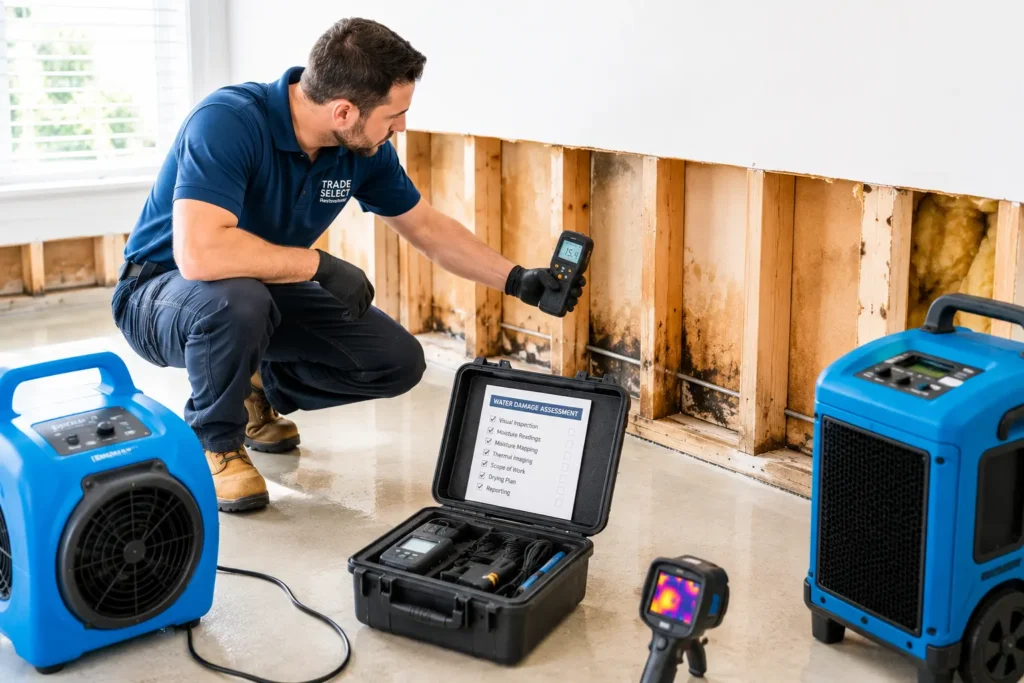
Visible water damage rarely shows the full extent of a loss.
A stained ceiling, swollen skirting board, damp carpet or peeling paint may be the first visible sign, but moisture can spread beyond that area. It may move through wall cavities, insulation, flooring systems, joinery and adjoining materials after the original leak or flood.
That is why a water damage assessment should take place before drying and repair decisions are finalised.
A clear assessment identifies where moisture has travelled, which materials are affected and what needs to happen next. It gives insurers, adjusters, property managers and builders a stronger basis for planning drying, approving repairs and controlling costs.
Without that early clarity, hidden damage may only be discovered after demolition or reinstatement begins. This can lead to revised scopes, repeat visits, programme delays, additional drying and disputes over what should have been identified earlier.
Why Visible Damage Does Not Show the Full Moisture Scope
Water rarely stays where it first appears.
It can track along structural elements, move beneath floor coverings, soak into porous materials and spread into nearby rooms. A small ceiling stain may be connected to wet insulation, plasterboard, cornices, wall linings or flooring that still appears unaffected.
The visible boundary is not always the true damage boundary.
This matters in commercial and insurance-related work because an incomplete scope can affect:
- Repair costs
- Drying time
- Trade sequencing
- Tenancy or business disruption
- Claim decisions
- Handover dates
- Contractor coordination
Starting from surface damage alone may appear faster, but it can push uncertainty further into the project. Once materials are removed, the original scope may no longer reflect the actual loss.
| Surface-only approach | Full moisture assessment |
| Relies mainly on visible damage | Checks visible and concealed risk areas |
| May define the scope too narrowly | Helps identify the likely damage boundary |
| Can miss connected wet materials | Supports targeted drying and investigation |
| Increases the chance of later scope changes | Gives stakeholders a clearer basis for decisions |
| May delay hidden discoveries | Brings uncertainty forward before repairs begin |
What the Assessment Needs to Establish
A water damage assessment should do more than confirm that an area is wet.
It should establish the extent of the loss and provide enough evidence to support the drying and repair strategy.
The Source of the Water
The first step is to identify the source where possible and confirm that it has been stopped or controlled.
This may involve checking plumbing, roofing, drainage, appliances, building services or water entry points. Understanding the source can also help explain how moisture may have moved through the property.
The Moisture Path
Water can travel away from the visible damage through cavities, junctions and absorbent materials.
The assessment should consider likely moisture paths, including:
- Wall and ceiling cavities
- Skirting and cornice lines
- Flooring and underlay
- Subfloors
- Insulation
- Joinery and cabinetry
- Adjoining rooms
- Structural materials
This helps prevent the scope from being limited to the most obvious area.
The Affected Materials
Different materials respond to water in different ways.
Some may be suitable for controlled drying. Others may trap moisture, swell, delaminate, lose strength or become unsuitable for retention.
Workplace Health and Safety Queensland recommends cleaning and drying water-damaged areas within 24 to 48 hours. It also advises that porous materials such as plasterboard, insulation, ceiling tiles and carpet may need to be discarded if they have remained wet for more than 48 hours or developed visible mould. This reinforces the importance of identifying all affected materials early rather than relying only on surface appearance.
The assessment should identify:
- Which materials are wet
- How far the moisture has spread
- Whether the material may be dried in place
- Whether access is required
- Whether removal or replacement may be necessary
- Whether further investigation is needed
Access and Containment Requirements
Some affected areas cannot be assessed fully without opening finishes or creating access points.
The scope should record any practical limitations and explain how concealed areas may be checked. It should also consider whether containment is needed to protect unaffected areas during drying or removal work.
Documentation and Reporting
The findings should be recorded clearly enough for other parties to act on.
A useful assessment may include:
- Moisture readings
- Moisture maps
- Photographs
- Affected material lists
- Damage boundaries
- Access requirements
- Drying recommendations
- Monitoring requirements
- Repair considerations
This gives everyone involved the same documented record of what is affected, what needs further investigation and what should happen next.
How Moisture Mapping Improves the Scope
Moisture mapping replaces assumptions with recorded evidence.
Rather than relying only on visible staining or touch, technicians take readings across the affected and surrounding areas. These readings help identify where moisture levels are elevated, where they begin to reduce and whether the damage extends beyond the visible boundary.
A moisture map can help show:
- The likely spread of water
- Areas that require drying
- Materials that need further investigation
- Locations that should be monitored
- Boundaries between affected and unaffected areas
Comparative readings from nearby materials may also help distinguish normal conditions from moisture related to the water event.
Moisture mapping is especially useful when several parties are involved. It gives builders, insurers, adjusters and property managers a consistent reference point instead of leaving each party to form a separate opinion at a different stage of the job.
How a Water Damage Assessment Is Carried Out
The exact process depends on the property and the type of loss, but a typical assessment may include the following stages.
1. Site Safety and Source Review
The site is checked for immediate risks, including electrical hazards, unstable materials, contamination concerns and ongoing water entry.
The source is identified where possible and the event history is reviewed.
2. Visual Inspection
The technician checks the affected and surrounding areas for visible signs of damage, including:
- Staining
- Swelling
- Warping
- Softening
- Peeling finishes
- Damaged flooring
- Wet insulation
- Odour
- Corrosion
- Material breakdown
3. Moisture Testing
Appropriate moisture detection equipment is used to assess the extent of the damage.
This may include non-invasive readings, targeted invasive readings or other investigative methods, depending on the materials and access available.
Thermal imaging may help identify temperature patterns that justify further testing, but it should not be treated as proof of moisture on its own. Suspected areas should be checked with suitable moisture detection equipment.
4. Concealed Area Investigation
The technician considers whether water may have spread behind finishes, beneath flooring or into adjoining materials.
Where necessary, limited access may be recommended to confirm the condition of concealed areas.
5. Moisture Mapping and Documentation
Readings and observations are documented to create a clear picture of the affected area.
This supports decisions about drying, removal, monitoring and repair.
6. Drying and Remediation Recommendations
The assessment findings are used to define the next steps.
These may include:
- Controlled drying
- Material removal
- Further investigation
- Containment
- Ongoing moisture monitoring
- Repair sequencing
- Specialist testing where appropriate
Why the Drying Plan Depends on the Assessment
A drying plan can only be accurate when the true moisture scope is understood.
If hidden moisture is missed, equipment may be placed only in the visible area while connected materials remain wet. Monitoring may also focus on the wrong locations or stop before deeper materials have stabilised.
The assessment should help determine:
- The size of the affected area
- Which materials may be dried
- Which materials may require removal
- Equipment requirements
- Equipment placement
- Access needs
- Monitoring locations
- Likely drying constraints
- When reinstatement can begin
The type of property also matters.
Commercial buildings may have occupancy deadlines, sensitive finishes, restricted access or operational areas that require careful planning. Residential and insurance-related losses may involve flooring systems, cabinetry, insulation and adjoining rooms that need assessment before repairs are approved.
Assessment and drying should therefore be treated as connected stages rather than separate services.
The Risks of Starting Repairs Before the Moisture Scope Is Clear
Surface damage can make a repair appear straightforward. A section of plasterboard may be marked for replacement, carpet may be lifted or joinery may be included in a repair quote.
The scope can change once finishes are removed and concealed areas become accessible.
Starting repairs too early can lead to:
- Additional demolition
- Revised repair quotes
- Repeat drying
- Replacement materials becoming affected
- Delayed trade sequencing
- New variation claims
- Disagreement over responsibility
- Extended business or tenancy disruption
The result is often two layers of cost: the original repair and the correction of work that began from an incomplete scope.
A rushed start does not remove uncertainty. It moves that uncertainty to a later stage, where it is usually more expensive and disruptive to resolve.
How Early Assessment Helps Each Stakeholder
Insurers and Adjusters
A documented moisture scope helps connect the event, the damage pattern, the drying requirement and the repair cost.
This supports clearer claim decisions and reduces the risk of unexpected scope changes after work begins.
Property Managers
Property managers need to understand the likely disruption, affected zones, urgency and repair sequence.
A proper assessment supports clearer communication with tenants, owners and contractors.
Builders
Builders need an accurate understanding of the affected materials before preparing a repair scope.
Better assessment supports estimating, trade sequencing, access planning and contingency decisions. It cannot remove every unknown, but it can reduce preventable variations.
Owners and Occupiers
For property owners and occupiers, the main concern is often whether the building will be dry, safe and ready for normal use.
A thorough assessment reduces the risk of concealed moisture remaining behind completed finishes.
What to Look for in a Water Damage Specialist
A water damage specialist should be able to do more than identify a wet surface and recommend equipment.
Before approving repairs, look for a team that can:
- Investigate moisture beyond the visible area
- Explain likely moisture movement
- Assess different building materials
- Identify access limitations
- Record moisture readings
- Create a clear damage boundary
- Provide photographic documentation
- Recommend drying and monitoring requirements
- Communicate findings to insurers, builders and property stakeholders
- Explain what should happen before reinstatement
Reporting quality is particularly important.
If the scope exists only in verbal updates or scattered notes, later disagreement becomes more likely. A clear report should allow the next decision-maker to understand what was found, why it matters and how it affects drying and repairs.
Confirm the Moisture Scope Before Approving Repairs
Repairs should not begin until the affected area has been properly assessed and documented.
A clear moisture scope helps establish what needs drying, what may require removal and what can remain in place. It also gives insurers, adjusters, property managers and builders a stronger basis for approving costs, sequencing trades and managing the loss.
Trade Select provides water damage assessments, moisture mapping, damage documentation and remediation planning for residential, commercial and insurance-related properties.
Arrange a site assessment before repairs begin to confirm the moisture boundary, define the drying scope and establish the next steps.
Water Damage Assessment FAQs
How Is a Water Damage Assessment Different From a Repair Quote?
A repair quote prices the work needed to restore damaged areas.
A water damage assessment defines the extent of the damage first. It identifies affected materials, hidden moisture, access requirements and the likely drying scope.
Without this assessment, a repair quote may reflect only the damage that was visible at the time.
Can Hidden Moisture Remain After an Area Looks Dry?
Yes.
A surface may appear dry while moisture remains inside plasterboard, insulation, flooring, joinery or other materials. Visual inspection alone cannot confirm that deeper materials have stabilised.
Moisture readings and ongoing monitoring provide a more reliable basis for repair decisions.
When Should Moisture Mapping Be Completed?
Moisture mapping should be completed as early as practical once the site is safe and the water source has been controlled.
Early mapping helps establish the initial damage boundary, identify concealed risk areas and support the drying plan.
Can Starting Repairs Early Increase Restoration Costs?
Yes.
If repairs begin before hidden moisture is properly scoped, further damage may be discovered after work is underway. This can lead to additional demolition, repeat drying, revised repair scopes and replacement of newly installed finishes.
