 Skip to content
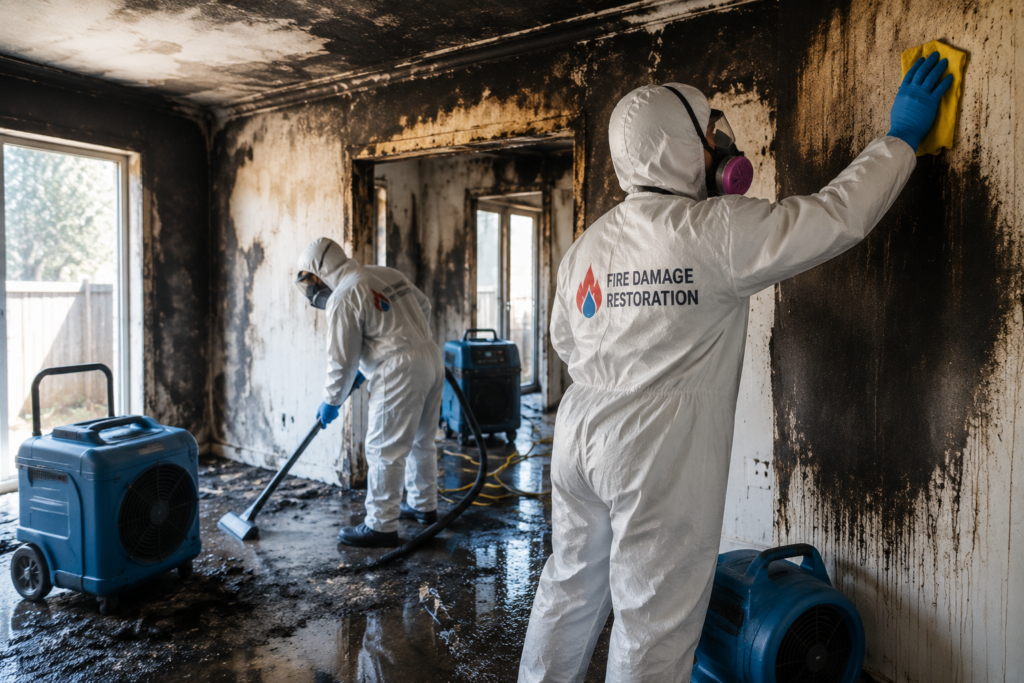
After a fire, the damage rarely stops where the flames ended.
Smoke can travel through adjoining rooms, ventilation systems and concealed spaces. Soot can settle on walls, ceilings, fittings and contents well beyond the source area. Odours may remain inside porous materials, soft furnishings and building cavities.
Firefighting water can create a secondary restoration challenge. Wet plaster, flooring, insulation, timber and contents may continue to deteriorate after the fire has been extinguished.
Effective fire damage restoration involves more than debris removal or visible soot cleaning. The property requires a safety assessment, a detailed evaluation and a controlled restoration process.
For homeowners, commercial property owners, property managers and insurers, the first questions are often similar: Is the property safe? Which items can be restored? What requires removal? How soon can recovery begin?
Our fire damage restoration services in Melbourne address structural damage, contents, smoke, soot, odour and water as one connected loss.
How Fire Damage Spreads Beyond the Burn Area
The visibly burned area is only one part of a fire loss.
Residential fires continue to affect properties across Australia. The Productivity Commission reported 71.0 accidental residential structure fires per 100,000 households nationally in 2024–25, highlighting why fire recovery requires more than addressing the area where flames were visible.
Smoke and airborne particles can move through doorways, ceiling spaces, ventilation pathways and HVAC systems. Soot may settle on surfaces far from the original fire, while odours can penetrate carpets, curtains, furniture, insulation and other porous materials.
Water used during firefighting can also soak into:
- Walls and ceilings
- Timber framing
- Flooring and subfloors
- Insulation
- Cabinetry
- Furniture and personal belongings
If these areas are not identified and treated promptly, the building may continue deteriorating after the emergency has passed. Moisture can damage materials, delay repairs and increase the risk of mould growth.
A proper assessment must therefore consider the entire affected property, not only the room where the fire started.
The First Steps in Fire Damage Restoration
The first priority is to make the site safe and reduce the risk of further damage.
Our team inspects the affected areas, documents the loss and identifies immediate hazards. We assess the extent of smoke, soot, odour and water exposure across the structure and contents.
The initial assessment helps determine:
- Which areas require isolation
- Which materials can be cleaned or restored
- Which items require specialist treatment
- Which materials are unsafe or cannot be restored
- Whether structural drying is required
- Whether air filtration or odour treatment is necessary
- Whether occupancy restrictions should remain in place
This early stage gives property owners, managers and insurers a clearer basis for approving works and planning the next steps.
Fire Damage Restoration Process
The exact restoration plan depends on the severity of the loss, the materials affected and the condition of the property. However, most projects follow a controlled sequence.
| Stage | What it may involve | Why it matters |
| Make-safe and assessment | Hazard identification, documentation, access controls and initial protection | Reduces immediate risks and defines the restoration scope |
| Containment and removal | Isolation of affected areas, debris removal and disposal of non-restorable materials | Limits cross-contamination and prepares the site for cleaning |
| Air and surface cleaning | HEPA filtration, soot removal and cleaning of affected structural surfaces | Removes airborne particles and surface contamination |
| Structural drying | Moisture testing, water extraction, dehumidification and monitored drying | Reduces further material damage and mould risk |
| Odour treatment | Targeted deodorisation, air treatment and treatment of affected materials | Addresses persistent smoke odours at their source |
| Contents restoration | Inventory, cleaning, deodorisation, packing, storage and reporting | Protects recoverable belongings and supports insurance decisions |
| Final review | Inspection, moisture checks and confirmation of completed restoration steps | Supports repair planning and reoccupation decisions |
Not every property will require every treatment. The restoration method should always be based on the site conditions, contamination profile and materials involved.
Soot Cleaning and Smoke Damage Restoration
Soot is not simply dust. It can contain fine particles and residues that spread easily and bond to surfaces.
Incorrect cleaning methods may smear soot, drive residue deeper into porous materials or cause permanent staining. Affected surfaces should therefore be assessed before cleaning begins.
Depending on the material and level of contamination, restoration may include:
- HEPA vacuuming
- Dry soot removal
- Specialist surface cleaning
- Cleaning of walls, ceilings and structural materials
- Treatment of fixtures and fittings
- Removal of materials that cannot be restored
- Air filtration during restoration work
Areas that appear visually clean may still contain smoke residue or odour. Cleaning should be guided by the wider contamination assessment rather than appearance alone.
Why Firefighting Water Must Be Treated Quickly
Once the fire is out, water damage can begin worsening the loss.
Water used to control the fire may enter wall cavities, flooring systems, insulation and concealed areas. Materials can remain wet even when the surface appears dry.
Structural drying may involve:
- Moisture inspections
- Water extraction
- Removal of damaged materials
- Air movement
- Dehumidification
- Temperature control
- Ongoing moisture monitoring
Drying forms an essential part of the restoration process after soot cleaning.
When smoke contamination and water saturation occur together, cleaning, removal and drying require careful coordination. Starting cosmetic repairs too early can trap moisture or contamination within the building.
Smoke Odour Removal
Smoke odours can remain long after visible debris and soot have been removed.
Odour molecules may penetrate soft furnishings, timber, plasterboard, insulation, carpets and other porous materials. Masking the smell with fragrance does not resolve the source.
Effective odour treatment begins with source removal. Contaminated debris and non-restorable materials must be dealt with before deodorisation work is completed.
Depending on the property and contamination profile, treatment may include:
- Detailed surface cleaning
- HEPA air filtration
- Treatment of porous materials
- Thermal fogging
- Hydroxyl treatment
- Ozone treatment in controlled conditions
- Cleaning or treatment of relevant ventilation systems
The selected method must suit the site. Some treatments require strict safety controls or temporary vacancy, so they should only be used where appropriate.
Contents Restoration After a Fire
Contents are often as complex to restore as the building itself.
Furniture, clothing, electronics, documents, stock and personal belongings may be affected by soot, smoke, odour or water. Some items can be cleaned and restored. Others may require specialist treatment, temporary storage or replacement.
A structured contents process may include:
- Item assessment
- Photographic documentation
- Inventory preparation
- Classification by room or location
- Packing and removal
- Cleaning and deodorisation
- Secure storage
- Identification of non-restorable items
- Reporting for insurance or recovery planning
Clear documentation helps owners and insurers understand which items have been recovered, which are undergoing treatment and which cannot be restored.
It also reduces confusion when restoration teams move large volumes of contents off site.
Fire Restoration for Homes and Commercial Properties
Residential and commercial fire losses often involve different recovery priorities.
Homeowners may be focused on safety, personal belongings, temporary accommodation and the timing of their return.
Commercial property owners may also need to manage:
- Business interruption
- Customer and staff access
- Stock and equipment losses
- Tenant communication
- Programme deadlines
- Insurer and assessor coordination
- Staged reopening
A commercial restoration plan should account for operational priorities as well as physical damage. Where safe and practical, work may need to be staged so unaffected areas can remain accessible.
What to Expect Before Work Begins
Before restoration work begins, the scope should be clear enough to support informed decisions.
Property owners, managers and insurers should understand:
- Which areas are affected
- What immediate hazards require attention
- Which materials can be restored
- Which materials require removal
- Whether drying is necessary
- Whether specialist odour treatments are recommended
- How contents will be managed
- Which areas of the property remain unsafe
- What documentation and reporting will be provided
A fast response matters, but speed without proper assessment can result in missed damage, duplicated work and increased costs later.
The objective is to start with a clear, controlled restoration plan that addresses the full scope of the damage.
Why Partial Fire Damage Cleaning Is Not Enough
Cleaning visible soot does not always resolve the full loss.
Smoke residue may remain on hidden surfaces. Odours can persist inside porous materials. Water may continue damaging walls, floors and contents. Airborne particles may also move beyond the visibly affected area.
A complete restoration plan considers the structure, contents, air quality and moisture conditions together. It records what can be cleaned, what needs specialist treatment and what must be removed.
Managing these issues as one coordinated process reduces the risk of missed contamination, delayed drying and avoidable disruption.
Why Choose a Professional Fire Restoration Team?
Fire restoration requires technical judgement, careful sequencing and clear documentation.
A professional restoration provider should be able to:
- Respond promptly to urgent losses
- Assess visible and concealed damage
- Coordinate structural and contents restoration
- Document affected areas and items
- Communicate clearly with owners, managers and insurers
- Select suitable cleaning, drying and odour-control methods
- Monitor progress throughout the restoration process
- Provide a clear pathway towards repairs and reoccupation
The right team should also explain what can be restored, what needs specialist treatment and what may need to be removed before work begins.
Need Fire Damage Restoration in Melbourne?
The first step after a fire is to make the property safe and understand the full extent of the damage.
We can assess smoke, soot, odour, water damage and affected contents, then develop a controlled restoration plan based on the condition of the site.
For urgent fire damage restoration in Melbourne, contact Trade Select fire damage restoration team to arrange a site assessment and discuss the next steps.
Frequently Asked Questions
What does fire damage restoration include?
Fire damage restoration may include emergency make-safe work, site assessment, documentation, debris removal, soot cleaning, structural drying, odour treatment, air filtration and contents restoration.
The exact scope depends on the severity of the fire and the materials affected.
Can smoke and soot spread beyond the room where the fire started?
Yes. Smoke and soot can travel through adjoining rooms, ventilation systems, ceiling cavities and other pathways.
That is why the assessment should cover the wider property rather than only the visibly burned area.
Does firefighting water need to be removed?
Yes. Water used to extinguish a fire can absorb into building materials and contents, creating the potential for further damage.
Water extraction, moisture testing and structural drying may help reduce ongoing damage and mould risks.
Can belongings be restored after a fire?
Some belongings can be restored depending on the material, contamination level and extent of the damage.
The contents restoration process may include assessment, documentation, cleaning, deodorisation, storage and identifying items that cannot be restored.
How are smoke odours removed?
Smoke odour removal usually begins with removing contaminated debris and cleaning affected surfaces.
Additional treatment may include HEPA filtration, deodorisation, fogging, hydroxyl treatment or ozone treatment where suitable.
How quickly should fire restoration begin?
Restoration should begin as soon as the property is safe to access.
Early assessment can reduce secondary damage, identify urgent drying needs and help prevent contamination from spreading.
Can I enter the property after the fire service leaves?
Do not assume the property is safe to enter simply because the fire has been extinguished.
Structural damage, electrical hazards, contaminated water, soot and airborne particles may still be present. Follow the instructions of emergency services and restoration professionals.
How long does fire damage restoration take?
The timeframe depends on the property size, the severity of the damage, drying requirements, contents affected and the amount of material requiring removal.
A site assessment helps determine the scope of work and provide a more reliable restoration programme.
Do fire restoration companies work with insurers?
Many restoration providers can supply assessment records, photographs, inventories and progress documentation to support insurance claims.
The level of direct insurer coordination varies, so it is worth confirming what reporting and communication support is included before work begins.
