 Skip to content
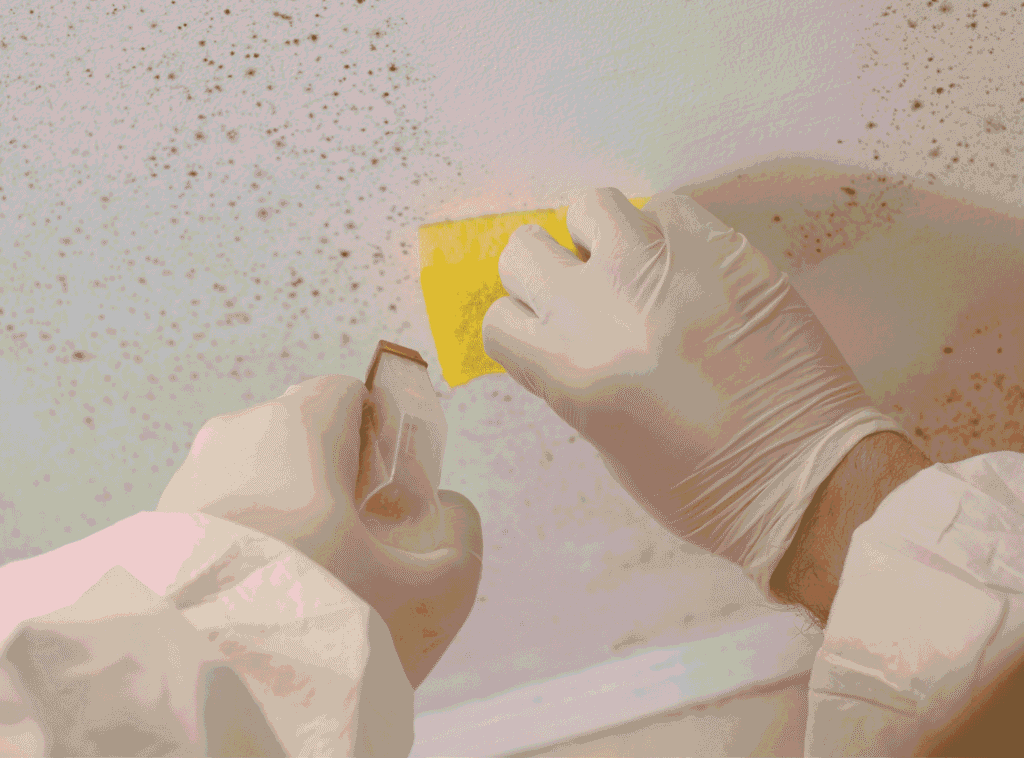
Mould problems rarely stay contained for long. What starts as a patch on a ceiling, wall, bathroom surface, or subfloor can spread through hidden damp areas, affect indoor air quality, and keep returning if the source of moisture is left untouched. In Bayswater, the right response is not just to clean what you can see. It is to contain the affected area properly, trace the moisture driving the growth, and carry out remediation with a clear plan.
We approach mould remediation with that full picture in mind. Our work is built around assessment, containment, moisture investigation, and targeted remediation, supported by related services such as mould inspection, moisture mapping, and direct contact for booking the next step.
Why Surface Cleaning Fails So Often
A lot of mould problems look simple at first. Wipe the surface, spray a product, open a window, and it seems handled. Then it returns. Sometimes within days. Sometimes after the next spell of damp weather or after a leak that never fully dried out.
That happens because visible mould is often only the symptom. The underlying issue may be a plumbing leak, poor ventilation, trapped moisture in building materials, condensation, or water intrusion that has moved into adjoining areas. Unless that source is identified and addressed, surface cleaning becomes a short-term cosmetic fix rather than a proper solution.
For property owners, tenants, managers, and business operators, that cycle becomes expensive fast. It can affect finishes, contents, occupancy, and confidence in the condition of the building. It also creates uncertainty. People are not just asking, “How do I get rid of this?” They are asking, “Why is this happening, and how do I stop it from coming back?”
What Proper Mould Remediation in Bayswater Actually Involves
Proper mould remediation is a process, not a single treatment. The sequence matters because each step reduces the risk of further spread and helps shape the scope of work.
Containment Comes Before Disturbance
When mould-affected materials are disturbed without containment, contamination can spread into nearby rooms, soft furnishings, air pathways, and adjoining surfaces. That is one of the first problems we aim to avoid.
Containment creates control. It helps isolate the affected zone, protect unaffected parts of the property, and reduce cross-contamination while remediation is underway. Trade Select’s mould removal service page specifically lists make safe and containment, structural cleaning and decontamination, and HEPA air filtration within its remediation process, which aligns with a containment-first approach.
Source Control Is What Stops the Cycle
Containment deals with spread. Source control deals with recurrence.
If mould is being fed by hidden moisture, intermittent leaks, long-term dampness, or condensation issues, that has to be identified during the assessment stage. This is where moisture mapping becomes especially useful. The site’s moisture mapping page describes it as a way to locate hidden moisture and help prevent mould growth, which is exactly why it belongs in a proper mould remediation workflow.
Removal, Cleaning, and Targeted Restoration
Once the affected areas and moisture conditions are understood, remediation can be carried out according to the extent of contamination and the condition of surrounding materials. In some cases, that means cleaning and decontamination. In others, it may involve the removal of unsalvageable materials, controlled deconstruction, drying, and follow-up restoration work.
The right method depends on what is affected, how far the contamination has spread, and whether moisture has moved into concealed building elements. A good remediation plan is never just a generic spray-and-go response.
Signs It Is Time to Book Professional Mould Remediation
Not every property owner calls at the first sign of mould. That is understandable. But there are clear indicators that the issue has moved beyond routine cleaning.
Mould Keeps Returning
If the same area keeps showing signs of mould after cleaning, there is a good chance the underlying moisture issue has not been resolved.
There Is a Persistent Musty Smell
Even when visible growth seems minor, a lingering musty odour can point to hidden moisture or mould growth in cavities, joinery, ceiling spaces, under flooring, or other low-visibility areas.
There Has Been a Leak, Overflow, or Water Damage Event
Mould often follows water damage when materials do not dry properly or when moisture remains trapped. Trade Select’s broader service pages connect water damage, moisture investigation, structural drying, and mould-related services, which reflects how closely these issues are linked in real properties.
Tenants, Staff, or Family Members Are Raising Concerns
In rentals, workplaces, and shared residential settings, complaints about damp smells, staining, recurring growth, or air quality usually mean the issue has become operational as well as physical. At that point, an assessment is usually the most efficient next move.
How We Approach Mould Remediation in Bayswater
We do not treat mould remediation as a generic cleaning job. We treat it as a building condition issue that needs to be assessed, contained, and resolved with the source in mind.
Initial Assessment and Risk Review
We start by looking at what is visible, what is likely happening behind it, and what conditions may be allowing mould to persist. That includes the location of the problem, likely moisture pathways, material type, extent of contamination, and whether there are signs the issue reaches beyond the immediately affected area.
This early stage shapes everything that follows. It helps define urgency, containment requirements, likely cause, and whether additional diagnostics are needed before remediation begins.
Mould Inspection and Moisture Mapping
Where the source is not obvious, we may recommend a more detailed [Mould Inspection] or [Moisture Mapping] stage as part of the job. The site’s mould inspection page refers to the use of tools and technical evaluation, while the mould removal page mentions moisture meters, thermal cameras, and assessment techniques during the initial mould inspection and assessment phase.
Those steps help us move beyond assumptions. Instead of guessing where moisture has travelled, we can define affected areas more clearly and build a remediation scope around evidence.
Scope of Works and Remediation Planning
Once the affected area and source conditions are understood, we map out the work required. That may include containment, removal of damaged materials, structural cleaning, drying, decontamination, odour treatment, and restoration-related follow-through where needed.
What matters here is clarity. Property owners need to understand what is being remediated, what is being preserved, what may need removal, and what needs to happen to reduce the chance of recurrence.
Containment, Remediation, and Follow-Through
From there, we carry out the remediation in sequence. That means protecting unaffected areas, addressing contaminated sections safely, and keeping the work aligned with the actual condition of the building rather than a one-size-fits-all checklist.
Trade Select’s mould removal service page describes a process that includes triage, initial assessment, make-safe containment, mould removal, structural cleaning and decontamination, air quality control and HEPA filtration, and post-remediation steps. That service framework supports a remediation-led approach rather than a basic cleaning-only response.
Why Acting Early Usually Reduces the Scope
Mould problems do not always stay where they started. Moisture travels. Air moves contamination. Materials absorb and hold dampness in ways that are not obvious from a visual check alone.
NSW Health guidance indicates that mould growth is likely if materials are not dried within 48 hours after water exposure, which means delays can quickly shift a contained issue into a broader remediation problem.
That is why early action often changes the outcome. A contained, assessed, and properly scoped job is usually easier to manage than a delayed issue that has spread into cavities, contents, adjacent finishes, or multiple rooms. For landlords and commercial operators, acting earlier can also reduce disruption and help narrow the extent of restorative works later.
If you suspect an active mould issue in your Bayswater property, the practical next step is to request an assessment and understand the scope before it escalates.
Mould Remediation for Homes, Rentals, and Commercial Sites
Different properties present different pressures, even when the mould itself looks similar.
Residential Properties
In homes, the focus is often on indoor conditions, recurring damp areas, bathrooms, laundries, ceilings, bedrooms, and the concern that mould may be affecting daily living spaces. Homeowners generally want two things sorted quickly: the visible problem and the cause behind it.
Rental Properties and Managed Assets
In rental settings, there is usually an added layer of urgency because complaints, access arrangements, documentation, and the condition of habitable areas all matter. A structured assessment helps establish what is affected and what needs to be remediated without guesswork.
Offices, Retail, and Commercial Premises
For commercial sites, downtime and containment are often central concerns. The challenge is not just removing mould. It is doing so in a way that limits operational disruption and addresses the moisture source before the issue spreads further into fit-outs, finishes, stock, or shared areas.
Trade Select presents its services across residential and commercial settings and also positions itself around site assessments, reporting, and restoration-related services, which supports this broader property-type coverage.
What to Look for in a Mould Remediation Company in Bayswater
Not every provider approaches mould the same way. If you are comparing options, look for a service that addresses more than visible growth.
A sensible remediation process should include:
- an assessment of the affected area
- attention to containment
- a plan to identify or confirm the moisture source
- a remediation scope based on actual site conditions
- related services such as inspection and moisture investigation where needed
That matters because the real test of mould remediation is not whether the area looks clean on day one. It is whether the issue has been approached in a way that helps prevent recurrence.
Before You Book, Here’s What Most Property Owners Want to Know About Mould Remediation
What is the difference between mould removal and mould remediation?
Mould removal usually refers to taking away visible growth. Mould remediation is broader. It includes containment, investigation, cleaning or removal of affected materials, and action around the source of moisture.
Do you need to find the moisture source before remediation starts?
In many cases, yes. If the moisture source is not identified, mould can return even after the affected area has been cleaned.
Can mould come back after professional treatment?
It can, if the conditions that allowed it to grow are still present. That is why source control and moisture assessment are central to the process.
How quickly should mould in a Bayswater property be assessed?
As soon as there are signs of active growth, persistent damp odours, or recurrence after cleaning. Early assessment usually gives you more control over the scope of works.
Do I need a mould inspection before remediation?
Not every job requires a standalone inspection first, but many benefit from one, especially when the source is unclear or there are signs the issue extends beyond the visible area.
When is moisture mapping useful?
Moisture mapping is useful when you need to understand how far water or dampness has travelled, where moisture remains hidden, and whether surrounding materials may also be affected. Trade Select specifically offers moisture mapping as part of its service set for locating hidden moisture.
Can you remediate mould in commercial properties as well as homes?
Yes. The service offering on the site covers both residential and commercial property contexts across restoration-related work.
Book a Mould Remediation Assessment in Bayswater
If mould is active in your property the safest next step is to deal with it properly and not cosmetically. That starts with understanding the extent of the problem containing affected areas where needed and identifying the moisture source driving it.
At Trade Select Building Restoration we assist Bayswater property owners with mould remediation and Moisture Mapping supported by a structured assessment and remediation approach.
For Bayswater properties contact Trade Select Building Restoration today to request an assessment or book remediation. Visit our Contact Us page or call our team to arrange an inspection and move forward with the right remediation plan.
