 Skip to content
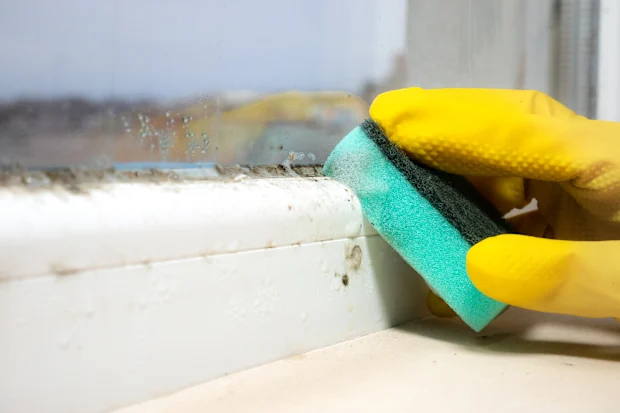
You clean the mould, the surface looks clear, and then the same marks return a week or two later.
When mould keeps coming back in the same corner, around the same window or across the same bathroom ceiling, the cleaning product is rarely the main problem. In most cases, moisture is still reaching the area through condensation, poor ventilation, a leak or hidden dampness.
Cleaning removes the visible growth. It does not remove the conditions that allowed it to develop.
The real question is what keeps feeding the mould.
Why cleaning alone does not stop mould
Mould needs moisture to grow. If an area stays damp or repeatedly becomes damp, mould can return even after a thorough clean.
The moisture may come from:
- Condensation on cold walls, ceilings or windows
- Poor ventilation in bathrooms, laundries or bedrooms
- Leaking pipes, roofs or windows
- Water damage that has not dried properly
- Moisture trapped behind walls, ceilings or flooring
- Damp porous materials such as plasterboard, timber or insulation
This is why surface cleaning often provides only temporary relief. The mould disappears, but the environment remains suitable for regrowth.
Four common reasons mould keeps returning
1. Condensation keeps affecting the same surface
Condensation forms when warm, moisture-heavy air meets a colder surface.
Bathrooms are a common example. Steam from showers can collect on ceilings, windows, grout, silicone and painted walls. Kitchens, laundries, wardrobes and poorly ventilated bedrooms can develop the same problem.
If these surfaces do not dry properly, mould has a reliable moisture source.
Dampness and mould are widespread problems in Australian housing. University of Sydney research states that one in three Australian homes suffers from excessive dampness and mould proliferation. This highlights why ongoing condensation should be treated as a moisture-management issue rather than simply cleaning mould each time it appears.
Signs that condensation may be contributing include:
- Water collecting on windows
- Mould around window frames
- Damp bathroom ceilings
- Growth in corners behind furniture
- A room that remains humid long after use
- Mould that becomes worse during colder weather
Cleaning may remove the visible growth, but it will not stop the daily condensation cycle.
2. Moisture is trapped behind the surface
Sometimes the visible patch is only part of the problem.
Moisture can collect behind plasterboard, inside wall cavities, under flooring, around window frames or above ceilings. The front surface may be cleaned while damp materials remain hidden behind it.
Possible signs of hidden moisture include:
- Mould returning in exactly the same place
- Musty odours that remain after cleaning
- Bubbling or peeling paint
- Discoloured plaster
- Soft or damaged building materials
- A wall or ceiling that feels damp
- Mould spreading beyond the original patch
Hidden dampness should be investigated rather than repeatedly cleaned, covered or painted over.
3. The original moisture source was never repaired
Mould can continue to return if the leak, drainage issue or ventilation problem behind it is still active.
Common sources include:
- Leaking pipes
- Roof leaks
- Failed waterproofing
- Damaged gutters or downpipes
- Water entering around windows
- Poor bathroom extraction
- Previous flooding or water damage
- Persistent rising or penetrating damp
Until the source is identified and repaired, cleaning is likely to remain a temporary measure.
4. The clean-up did not address affected materials
Not every mould problem can be resolved with a spray and cloth.
Mould may affect porous materials, enclosed spaces or areas that cannot be treated effectively from the surface. In some cases, damaged materials need to be removed, the area dried and the moisture source corrected.
Painting over mould is not a reliable solution. Neither is repeatedly applying cleaning products while the material underneath remains damp.
Professional assessment is advisable when mould:
- Covers a large area
- Returns soon after cleaning
- Has spread into porous materials
- Is linked to flooding or a leak
- Produces a persistent musty smell
- Appears inside cupboards, cavities or ceiling spaces
What recurring mould may be telling you
| What you notice | Possible cause | Recommended next step |
| Mould around windows or cold corners | Condensation and poor airflow | Improve ventilation, wipe condensation and monitor whether the area dries properly |
| Mould returning in exactly the same place | Hidden moisture or an unresolved leak | Arrange a moisture assessment and inspect nearby building materials |
| Bubbling paint, staining or soft plaster | Water damage behind the surface | Investigate the source before repainting or cleaning again |
| Bathroom ceiling mould after showers | Steam, poor extraction or slow drying | Improve extraction and ventilation, then monitor for regrowth |
| Musty odours after cleaning | Hidden dampness or affected porous materials | Seek professional assessment |
| Mould spreading across several areas | Broader moisture or ventilation problem | Review the property rather than treating each patch separately |
Why bathroom mould often comes back
Bathrooms create moisture every day.
Showers, baths, wet towels and limited airflow increase humidity. Cooler ceilings, windows and external walls then collect condensation.
Mould commonly returns around:
- Ceiling corners
- Grout lines
- Silicone seals
- Window frames
- Exhaust fans
- Shower screens
- Areas above baths and showers
If the bathroom does not dry between uses, mould may return no matter how carefully the surface is cleaned.
The long-term solution is to reduce moisture, improve drying and check whether the room has adequate ventilation.
How to reduce condensation and slow mould regrowth
Small condensation-related problems may improve when the room is ventilated and dried more effectively.
Practical steps include:
- Run the extraction fan during showers and leave it on afterwards.
- Open a window or door where safe and practical.
- Wipe moisture from shower screens, tiles and windows.
- Hang wet towels where they can dry properly.
- Avoid leaving damp clothing in enclosed rooms.
- Check that extraction fans vent outdoors rather than into the roof space.
- Leave a small gap between furniture and cold external walls.
- Use a dehumidifier in rooms that remain humid.
- Heat cold rooms consistently where practical.
- Repair damaged seals around windows, showers and baths.
These measures can help reduce everyday condensation. They will not fix leaking pipes, failed waterproofing or moisture trapped behind walls and ceilings.
If the area remains damp or mould returns despite better ventilation, the cause may be deeper than normal household humidity.
When DIY cleaning stops helping
A repeated outbreak is often the clearest warning sign.
Consider arranging a professional mould assessment when:
- Mould keeps returning after cleaning
- The affected area is spreading
- A musty smell persists
- Paint, plaster or timber is deteriorating
- The area feels damp
- Mould appeared after a leak or flood
- Growth is present in a ceiling space or wall cavity
- The source of moisture is not obvious
- Several rooms are affected
- Condensation controls have not improved the problem
A small, isolated patch caused by temporary condensation may be manageable with cleaning and better ventilation. Recurring or widespread mould requires a closer look at the conditions behind it.
Avoid disturbing extensive mould growth or damaged porous materials without appropriate advice. Aggressive scrubbing, sanding or demolition can spread contaminated material through the property.
What professional mould remediation may involve
Professional mould remediation should address the cause as well as the visible growth.
Depending on the property and the severity of the problem, the process may include:
- Inspection and assessment
The affected areas are examined to determine the extent of the growth and identify likely moisture sources. - Moisture detection
Damp materials and hidden moisture may be located using suitable inspection methods and equipment. - Containment
The work area may be isolated to reduce the movement of dust and airborne contamination. - Air filtration
HEPA filtration may be used where appropriate during remediation. - Removal and cleaning
Affected surfaces are treated, and materials that cannot be safely restored may need to be removed. - Drying
Damp materials and enclosed areas are dried to reduce the chance of regrowth. - Moisture-source repairs
Leaks, ventilation failures or water-entry points need to be addressed for the work to provide a lasting result. - Post-remediation checks
The area may be reviewed after treatment to confirm that the agreed work has been completed and the moisture issue is under control.
Not every property requires every step. The right response depends on the extent of the growth, the affected materials and the source of moisture.
Stop recurring mould at the source
Mould that keeps returning usually means moisture is still present.
Rather than cleaning the same patch again, the next step is to identify whether the problem comes from condensation, a leak, water damage or hidden dampness.
Trade Select provides mould assessment and remediation services across Melbourne for homes, rental properties and managed buildings. Book a mould assessment to identify the moisture source and determine the right remediation approach for your property.
Frequently asked questions
Why does mould come back after I clean it?
Mould usually returns because moisture is still present. The source may be condensation, poor ventilation, a leak, water damage or damp materials behind the visible surface.
Is recurring mould caused by condensation or a leak?
It can be caused by either.
Condensation is more likely in bathrooms, laundries, bedrooms and areas around cold windows. A leak or hidden moisture may be more likely when the area remains damp, paint is damaged, odours persist or mould returns despite better ventilation.
How can I reduce bathroom condensation?
Use the extraction fan, improve airflow, wipe wet surfaces, dry towels outside the room where possible and check that ventilation systems are working properly. Persistent condensation may require improvements to extraction or heating.
When should recurring mould be professionally assessed?
Arrange an assessment when mould keeps returning, covers a large area, spreads into porous materials, follows a leak or flood, produces persistent odours or appears to involve hidden dampness.
