 Skip to content
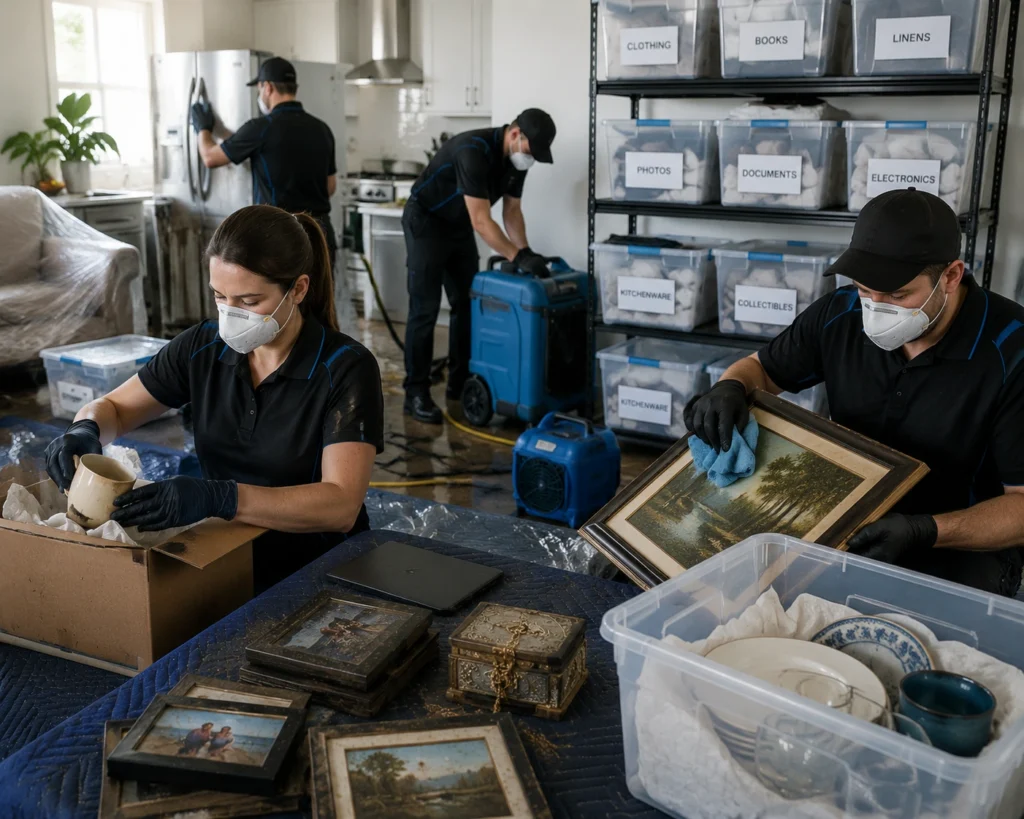
After a fire or water loss, the first concern is often not the building. It is everything inside it.
Furniture. Stock. Documents. Rugs. Electronics. Upholstery. Personal belongings. Business contents.
Decisions may need to be made quickly. Property owners, tenants and businesses want to know what is damaged, what may be recoverable and what should be moved before conditions worsen.
Contents restoration provides a structured process for assessing, documenting, cleaning, drying, storing or disposing of affected items. It replaces guesswork with a clear record of what has happened to each item and what should happen next.
Why Contents Decisions Become Urgent After Fire or Water Damage
Contents losses are rarely straightforward.
Fire losses can involve significant damage to household property and belongings. The Productivity Commission reported that the average household fire event insurance claim was $143,031 in 2024–25, demonstrating why accurate contents assessment, documentation and restoration planning are critical after a fire.
A sofa affected by smoke may still be restorable. Water-exposed business records may need to be stabilised before their condition can be assessed properly. Rugs, soft furnishings and boxed items may become harder to recover if they remain in unsuitable conditions.
At the same time, homeowners, tenants, insurers and site managers may all need reliable information about the condition and location of each item.
Early assessment helps identify items that may be suitable for restoration. It also supports clearer documentation before contents are moved, treated or disposed of.
Delays can make those decisions more difficult. Moving belongings without recording their condition can also create uncertainty later in the restoration or claim process.
What Contents Restoration Actually Includes
Contents restoration involves more than cleaning damaged belongings. It is a controlled process covering assessment, documentation, treatment, movement and storage.
Depending on the loss, the process may include:
- inventory management and item tracking
- restorability assessment
- on-site or off-site cleaning
- drying of suitable items
- deodorisation
- restoration laundry
- rug, upholstery and carpet cleaning
- pack-out and relocation
- secure, climate-controlled storage
- itemised reporting
- documentation and removal of non-restorable items
Some contents may be cleaned at the property. Others may need to be packed out for treatment or storage. Items that cannot be assessed immediately may be held for further review before a final decision is made.
A clear inventory helps ensure that each item can be traced throughout the process.
How We Decide What Can Be Saved, Cleaned or Stored
The process begins with assessment rather than assumptions.
Items are reviewed according to their condition, material, level of contamination, moisture exposure, likely restorability and handling priority.
In broad terms, contents may be placed into three categories:
| Category | What it means | Possible next step |
| Restorable | The item may be suitable for cleaning, drying or deodorisation | Treat on site or remove for appropriate treatment |
| Further review required | The final condition or treatment outcome is not yet clear | Document, isolate and reassess |
| Non-restorable | The item is not considered suitable for practical restoration | Document for disposal or claim review |
Not every item responds to damage in the same way. Furniture, rugs, documents, stock and electronics may be affected differently by heat, soot, smoke, water or contamination.
Documentation should take place before items are moved off site. Once belongings are packed out, cleaned or stored, accurate tracking becomes as important as the physical treatment.
A controlled item trail makes it easier to confirm what has been assessed, treated, stored or removed.
Contents Restoration After Fire Damage
Fire can affect contents in several ways.
Some items may be exposed directly to heat or flame. Others may be affected by soot, smoke residue, ash, odour or water used during firefighting.
For this reason, fire-damaged contents may require different treatments rather than one standard cleaning method.
The restoration process may include:
- contents assessment
- content removal and pack-out
- dry cleaning or restoration laundry
- rug, upholstery and carpet treatment
- odour treatment
- storage
- inventory planning and reporting
Contents restoration can be coordinated with the wider fire recovery process. Items may be removed and protected while building remediation continues.
This approach helps ensure that damaged belongings are not overlooked while structural work is underway. It also gives property owners, businesses and insurers a clearer record of each item’s status.
Salvage After Water Damage
Water damage can reduce the time available to make restoration decisions.
Some items may tolerate moisture exposure if they are handled and dried promptly. Others may deteriorate through swelling, staining, delamination or contamination.
Absorbent materials can be particularly vulnerable because they may retain moisture even when the surface appears dry.
Restorable contents may need to be dried, cleaned, relocated or packed out. In some cases, items can be moved elsewhere within the property. In others, they may need to be stored in a secure, climate-controlled facility while drying, remediation or repairs continue.
Storage is more than a convenience. It can protect suitable contents from further exposure while work continues inside the property.
Moving items at the appropriate time can also create space for structural drying and repairs.
What Homeowners, Insurers, Tenants and Commercial Clients Need From the Process
Different stakeholders have different priorities, but they all need clear information.
Homeowners want realistic answers about which belongings may be recoverable. Tenants need reassurance that their items will be documented and tracked. Businesses need organised handling that protects stock, equipment and records. Insurers need reporting that supports item status and claim review.
A structured inventory helps meet those needs.
Items can be documented, assigned a status and tracked through assessment, cleaning, storage or disposal. Progress reports also give clients and claim stakeholders a clear record of completed work and outstanding decisions.
Good documentation reduces uncertainty and makes later decisions easier to explain.
Need Contents Restoration? Start Before Further Damage Occurs
Delaying assessment can allow moisture, smoke residue, odour or contamination to cause further damage.
Moving belongings without documenting them can also make it harder to confirm their original condition or explain what treatment has been completed.
A better first step is a structured contents restoration process. This allows affected items to be assessed, cleaned, dried, stored or documented before the situation becomes harder to manage.
Trade Select provides Contents Restoration alongside Fire Damage Restoration and broader property recovery support.
Contact Trade Select to arrange an assessment after a fire or water loss.
What People Usually Ask Before Contents Are Packed Out, Cleaned or Written Off
What Is Contents Restoration After Fire or Water Damage?
Contents restoration is the controlled process of assessing, documenting, cleaning, drying, deodorising, storing or disposing of damaged belongings after a loss.
It may also include inventory management, item tracking, pack-out and reporting.
How Do You Decide Whether an Item Can Be Salvaged or Needs Replacement?
The decision depends on factors such as the type of item, its condition, the level of moisture or contamination and whether practical treatment is possible.
Some items can be assessed immediately. Others may need further review before a final decision is made.
Can Smoke-Damaged Contents Be Cleaned and Deodorised?
Some smoke-affected contents may be suitable for cleaning, deodorisation, laundry, rug treatment or upholstery treatment.
The appropriate response depends on the item, the type of exposure and its overall condition.
What Happens to Contents During Building Repairs?
Items may be documented, cleaned on site, relocated within the property, packed out, treated off site or placed in secure storage while repairs continue.
The appropriate option depends on the condition of the property and the treatment each item requires.
Do You Document Items for Insurance and Reporting Purposes?
Yes. Items can be allocated, tracked and recorded through an inventory and reporting process.
This helps property owners, businesses and claim stakeholders understand each item’s condition and status.
When Should Contents Be Moved Into Storage?
Storage may be appropriate when the building environment remains unstable, repairs are continuing or belongings need protection while treatment or claim decisions are completed.
Secure, climate-controlled storage can keep suitable contents away from further exposure.
