 Skip to content
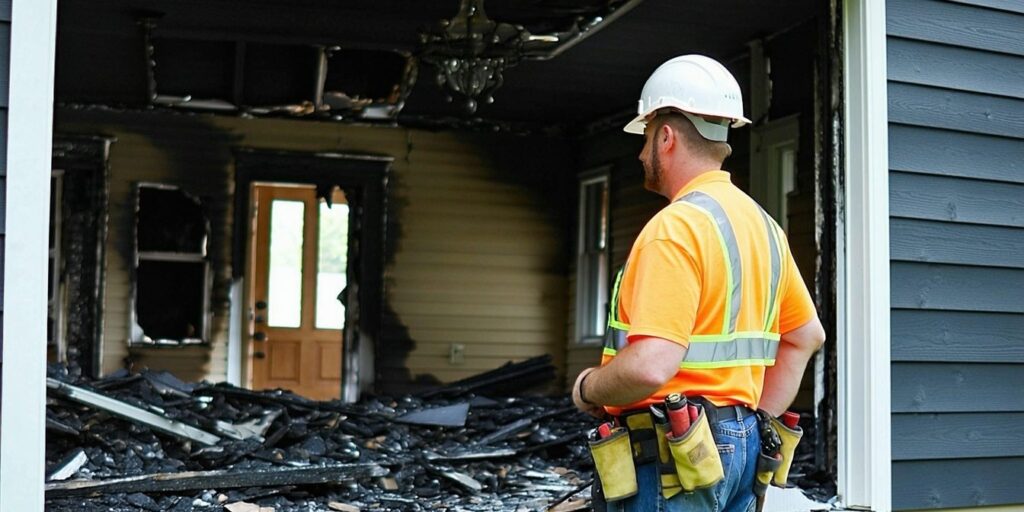
When a fire event moves into the assessment stage, the biggest risk is often not what everyone can already see. It is what gets missed. A fire damaged property can carry structural impact, smoke migration, soot deposition, odour issues, suppression related water damage, affected contents, and contamination beyond the obvious burn zone. If the early scope is too narrow, reinstatement starts on weak footing and the project can slide straight into delay, variation disputes, claim friction, and avoidable rework. That is why we treat fire damage assessment as the step that sets the direction for everything that follows.
Our documented service mix includes fire damage restoration, contents restoration, odour control and removal, site assessments and reporting, restoration project management, repair and maintenance support, and broader restoration services for commercial, insurance, and residential clients. The research materials also position us as a business that works with insurers, loss adjusters, brokers, insurance builders, and commercial stakeholders, which makes scope accuracy and reporting quality especially relevant at this stage.
A poor fire scope creates problems long before the rebuild begins
Once reinstatement starts, everyone wants momentum. Fair enough. But speed without scope clarity usually creates its own slowdown. If the assessment has not properly identified smoke spread, concealed damage, residue load, odour impact, affected materials, or secondary moisture issues, those gaps tend to show up later as interruptions rather than efficiencies.
That is where claims become harder to manage. Adjusters may need revised positions. Brokers end up explaining shifting scopes. Owners lose confidence in timelines. Contractors run into work fronts that were never properly defined. The rebuild has technically started, but the project is still arguing with the original assessment. That is not a construction problem. It is a scoping problem.
Why fire damage assessment is more than a visual inspection
A fire scene can look straightforward from the doorway. Burnt area here, smoke there, obvious demolition over there. In practice, the damage pattern is usually broader and less tidy than that first impression suggests.
Structural impact, smoke migration, residue, and hidden secondary damage
Fire affects more than the seat of the blaze. Heat can change material condition beyond visibly charred areas. Smoke can migrate into adjoining rooms, ceiling spaces, cavities, contents, and ventilation adjacent zones. Soot and residue can settle well outside the primary fire area. Odour can persist in structure and soft contents. If suppression was involved, water related impacts may also complicate the site. The business research materials consistently describe Trade Select Building Restoration as operating across fire, smoke, contents, odour, water, and wider restoration categories, which fits this broader assessment view.
Why incomplete scoping leads to claim friction later
An incomplete scope does not stay incomplete quietly. It usually creates disagreements about what was original fire damage, what was secondary damage, what should have been identified earlier, and what now sits outside expectations on timing or cost.
ABS data shows how large insurance pressure can become after major events. In the March 2020 quarter, household non-life insurance claims rose by $1.4 billion and reached a record $13.8 billion after bushfires, hailstorms, and related property damage. For fire restoration projects, that reinforces why accurate early scoping matters before claim decisions, reinstatement planning, and cost discussions move too far ahead.
What needs to be understood before reinstatement starts
Before reinstatement begins, the job is not simply to record what was burnt. The job is to build a scope that can survive contact with the actual site conditions.
What is damaged directly by fire
This is the most obvious layer. Materials may be destroyed, structurally weakened, heat affected, or no longer suitable for retention. The direct damage zone still needs careful attention because the visible severity can tempt people into rushing the assessment or assuming the rest of the property is comparatively simple.
What is affected by smoke, soot, odour, and contamination
This is where scope quality often separates a workable project from a drifting one. Smoke and soot do not stop neatly at the burn line. Odour does not either. Contents in nearby areas may require separate assessment. Finishes that appear intact may still be compromised by residue. The business’s documented service portfolio includes fire damage restoration, contents restoration, and odour control, which supports treating these secondary impacts as part of the formal assessment stage rather than as afterthoughts.
What needs restoration, what needs replacement, and what needs further investigation
Not every affected item should be treated the same way. While certain materials can be restored, others are beyond repair and should be replaced. In some cases, further evaluation is needed before the most appropriate course of action can be determined. A thorough scope of works makes these distinctions early, allowing reinstatement decisions to be based on clear findings and highlighting where additional investigation may still be required.
Why hidden secondary damage often changes the scope
The phrase “hidden secondary damage” sounds technical, but the practical meaning is simple. Damage extends beyond what the first walkthrough fully captures.
Ceiling cavities, wall systems, HVAC adjacent areas, and concealed spread
These are the places where scope omissions often begin. Smoke can move through ceiling spaces and service penetrations. Residue can affect enclosed zones that are not immediately visible. Wall systems may carry impacts that are only partially obvious from the finished face. Mechanical and shared service areas can also complicate the picture, particularly on commercial sites where building systems connect multiple spaces. If those areas are not assessed properly, the reinstatement scope may look complete on paper while still being incomplete in reality.
Moisture, suppression related damage, and post fire environmental issues
Fire losses are not always dry losses. Water used during suppression can introduce a second layer of damage involving damp materials, delayed drying, odour, and even mould risk if the site is left unmanaged for too long. The business research materials position structural drying, water damage restoration, and odour control alongside fire services, which reinforces the point that a fire assessment sometimes needs to account for more than fire alone.
What a strong fire damage report should help stakeholders do
A report is not valuable just because it is detailed. It is valuable when it helps the next decision happen with less ambiguity.
Reduce ambiguity for adjusters, brokers, insurers, and owners
Insurance and commercial stakeholders usually want the same thing at this stage. A clearer understanding of what has been affected, what is likely required, and where the uncertainties sit. Good reporting reduces room for avoidable interpretation battles and gives each stakeholder a more workable basis for action.
Build a cleaner path into reinstatement planning
Reinstatement planning works better when the assessment has already done the heavy lifting. That includes identifying affected zones, distinguishing between restoration and replacement candidates, highlighting concealed or secondary impacts, and setting expectations around next steps. The business’s documented site assessments and reporting capability is directly relevant here because it aligns the diagnostic stage with the project stage that follows.
Support better restoration versus replacement decisions
Over scoping wastes cost. Under scoping wastes time and creates friction later. A strong fire damage report helps narrow that gap by supporting more reasoned decisions about what can be restored, what should be removed, and what still needs testing or confirmation before a final path is chosen.
Why smoke damage assessment deserves separate attention
Smoke damage is often treated as a secondary note under the main fire assessment. That is usually too casual.
Smoke spread is not always obvious from the fire seat
Smoke migration does not follow the visual drama of the blaze. It can move into adjacent rooms, upper levels, enclosed services areas, ceiling spaces, and contents zones that look comparatively untouched. A site can have a relatively defined burn area and a much broader smoke impact area. That is one reason smoke damage assessment deserves separate thought rather than being folded into the background of the main fire narrative.
Residue, odour, and contents effects can extend beyond the primary damage zone
Even where structural damage appears localised, smoke residue, odour retention, and contents effects may extend further. This has direct implications for scope, cleaning, restoration pathways, and reporting accuracy. Trade Select’s documented service mix includes odour control, contents restoration, and fire damage restoration, which supports this wider treatment of smoke impact. Search performance materials also show existing relevance around fire damage restoration and related restoration queries, which makes this a commercially useful angle for the site.
How we approach scope building before reinstatement
We approach fire damage assessment as a decision support process, not a paperwork exercise. The point is to help the next stage move faster because the scope is stronger, not because questions were skipped.
Assess the loss beyond the visibly burnt area
We look beyond the obvious burn zone to consider smoke migration, affected contents, odour issues, concealed spread, and secondary impacts that may change the shape of the job. On commercial and insurance facing projects, that broader lens reduces the chance of scope drift later.
Document what can be restored, what requires replacement, and what needs further testing
Our goal is to turn the assessment into clear, practical decisions. Items that can be confidently restored are identified early, while those beyond repair are recommended for replacement. Where the condition is less certain, further investigation is recommended before a final decision is made. This structured approach helps stakeholders move forward with confidence while recognising that not every site presents straightforward answers.
Create reporting that helps the next decision happen faster
The report should reduce hesitation, not add another layer of it. Our documented service capability includes site assessments and reporting, restoration project management, and broader fire related restoration work, which supports a reporting led approach designed to improve handover into reinstatement and claims decisions.
Who benefits most from accurate early stage scoping
A better fire scope helps everyone involved, but different stakeholders feel the benefit in different ways.
Adjusters who need a cleaner basis for decisions
Adjusters need a scope they can work from without constantly reopening the same assumptions. Clearer identification of direct and secondary impacts helps reduce ambiguity and improves decision flow.
Brokers managing communication and expectations
Brokers often sit in the middle of competing pressures. Better assessment quality makes it easier to communicate what is known, what is still being confirmed, and why certain restoration or replacement paths are being considered.
Insurers and commercial owners trying to reduce delay and scope drift
Insurers want cleaner claims progression. Commercial owners want fewer surprises and a more credible path to reinstatement. Accurate scoping helps both. The company research materials repeatedly describe Trade Select Building Restoration as serving insurers, brokers, adjusters, commercial entities, and broader restoration stakeholders, which aligns well with this audience.
The questions people ask when the fire is out but the scope is still unclear
What should a fire damage assessment include before reinstatement starts?
It should assess more than visibly burnt materials. A useful assessment considers direct fire damage, smoke spread, soot and residue impacts, odour issues, affected contents, concealed areas, and any secondary damage that could change the reinstatement path.
Why is smoke damage assessment separate from visible fire damage?
Because smoke can travel and settle beyond the primary fire zone. A property may have limited direct burn damage but much wider smoke, residue, or odour impacts.
Can a poor initial scope delay an insurance fire damage claim?
Yes. If the original scope misses affected areas or secondary impacts, the claim process can slow down while decisions are revisited, variations are raised, and reporting is updated.
How do you decide what can be restored and what needs replacement after a fire?
That depends on material condition, contamination, extent of impact, and whether restoration is likely to produce a sound outcome. Some items can be restored, some should be replaced, and some need more investigation before the right call is made.
Does a fire damage report also account for odour, soot, and suppression related damage?
It should. Those factors can influence scope accuracy, restoration requirements, and the timing of the next stage.
When should a commercial owner or insurer request a formal assessment?
As early as possible once the site is safe to assess. Early reporting gives the project a better chance of moving into reinstatement with fewer blind spots and fewer disputes.
Before reinstatement starts, the scope needs to be right
A fire loss does not become easier because the first visible damage has been recorded. It becomes easier when the scope captures what the project actually needs. We provide fire damage assessment support through site assessments and reporting, alongside fire damage restoration, contents restoration, odour control, and broader restoration planning, so insurers, brokers, adjusters, and commercial owners can move towards reinstatement with clearer information and fewer surprises. If you need a fire damage assessment that builds the right scope before reinstatement starts, contact Trade Select Building Restoration and we can help define the next step properly.
