 Skip to content
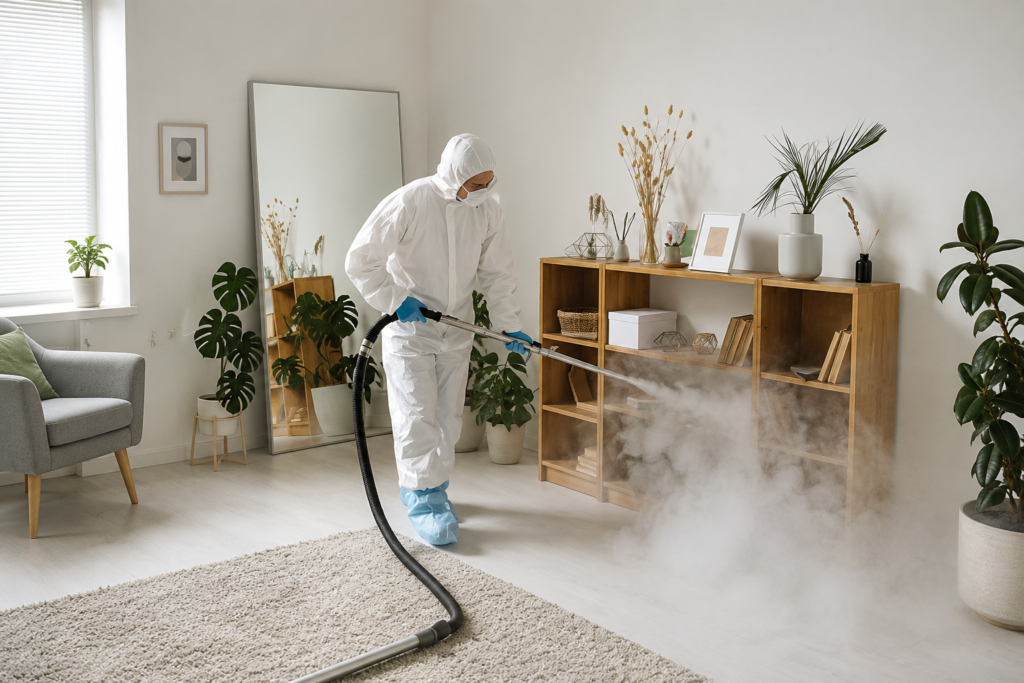
When a property still smells wrong after the initial clean up, there is usually more going on than a simple air quality annoyance. Persistent odours after smoke damage, mould growth, or water intrusion often point to residue, retained moisture, contamination, or damaged materials that have not been fully dealt with. That is why we approach odour removal as part of the restoration process itself. For us, odour removal in Melbourne is not about covering the smell. It is about helping remove the conditions causing it so the property can move closer to a genuinely recovered state.
Our documented service mix includes odour control and removal, fire damage restoration, mould remediation, water damage restoration, structural drying, contents restoration, commercial cleaning, and site assessments and reporting. The broader research materials also position us as a restoration focused business serving homeowners, commercial properties, insurers, and multi stakeholder sites across Melbourne and other service regions.
When the smell stays, the damage usually has not been fully dealt with
A lingering odour is often a clue. Smoke can settle into porous surfaces and contents. Water damage can leave dampness trapped in structural materials. Mould related odours can signal an indoor environment problem that has not been fully remediated. In each case, the smell is not the whole issue. It is evidence that some part of the issue may still be active or unresolved.
Odour removal is about more than simply eliminating unpleasant smells. Long after visible damage has been cleaned up, lingering odours can make homes feel uncomfortable and unwelcoming. Across offices, persistent smells may lead to repeated complaints even when the premises appear clean. Within strata properties, odours in shared spaces can quickly become a source of frustration for residents and visitors. Lasting results depend not only on removing the smell but also on identifying and treating the underlying cause.
Why odours keep returning after smoke, mould, and water damage
The reason odours linger is usually simple. The source has penetrated deeper than the first clean up reached.
Smoke odours that settle deep into surfaces and contents
After a fire or smoke event, odour particles and residue do not only sit in the open air. They can settle into walls, ceilings, soft furnishings, carpets, curtains, contents, and other porous surfaces. That is one reason smoke odour removal services need to be treated as part of fire damage restoration rather than as a final cosmetic touch. If smoke residue remains in the materials, the smell can keep resurfacing even after a room looks visibly cleaner. The business’s documented service offering includes both fire damage restoration and odour control, which supports that connection.
Musty smells after water damage and incomplete drying
A musty smell after water damage is one of the clearest signs that moisture may still be present somewhere in the property. That dampness may be in wall cavities, under flooring, behind skirtings, inside underlay, or in building elements that dried unevenly or too slowly. We see this often enough. The visible water is gone, the property has been cleaned, but the indoor environment still feels off because the drying phase was incomplete or hidden moisture remained trapped. Our research materials consistently position structural drying and moisture management as core parts of the broader restoration process for that reason.
Mould related odours that point to a bigger indoor environment issue
Mould related odours are rarely just an inconvenience. They often indicate that moisture conditions and contamination concerns need a more complete response. HealthyWA notes that indoor mould and dampness can cause unpleasant odours and damage to building materials, contents, and structures, which may lead to expensive maintenance or management costs. Surface treatment may change the smell briefly, but if the mould issue is still active or the damp source remains, the odour can come back. The business’s documented service portfolio includes mould removal and remediation alongside odour control, drying, and water damage services, which reflects how closely these issues overlap in real restoration work.
Why masking the smell is not the same as removing it
This is where many property owners lose time and money. A better smell for a few hours is not the same as a resolved odour problem.
What happens when the source is still active
If residue, mould, retained moisture, or contaminated materials are still present, the smell usually returns. Sometimes it returns slowly. Sometimes it comes back the moment the property is closed up again. Either way, the pattern is the same. Temporary deodorising creates the impression of improvement, but the underlying issue remains untouched. Professional odour removal has to start with cause, not fragrance.
Why complaints often return in homes, offices, and strata buildings
Persistent odours tend to create the same result across different property types. People lose confidence in the space. Homeowners stop feeling comfortable in their own rooms. Office staff keep raising indoor environment concerns. Strata residents start questioning whether the issue was ever properly fixed. Once that happens, the odour problem stops being minor. It becomes a credibility problem as well as a property problem.
What professional odour removal is actually designed to achieve
A proper odour removal response is not designed to make the space smell pleasant for a day. It is designed to help resolve the source conditions that are keeping the odour alive.
Treat the source, not just the symptom
That could mean dealing with smoke residues after a fire event, identifying damp materials after water damage, or connecting odour control to mould remediation where contamination is part of the issue. The goal is not to separate odour from restoration. The goal is to use odour removal as a remediation outcome.
Support cleaner indoor conditions after damage events
For homeowners, that means being able to use the space again without the constant reminder of what happened. For offices and strata properties, it means reducing the smell related complaints that can keep a site feeling unresolved long after visible works are complete.
Help complete the restoration process properly
Odour issues are often the part that tells you whether a restoration job has truly reached the finish line. If the smell remains, there is a fair chance something else does too. Our documented service mix, including odour control, fire damage restoration, water damage restoration, drying, and mould remediation, supports that wider view of the process.
How odour removal fits into smoke, mould, and water damage restoration
Odour removal makes the most sense when it is tied directly to the cause of the damage.
After smoke damage
Smoke odours tend to cling to both structure and contents. Walls, ceilings, carpets, upholstered items, and enclosed spaces can all retain that smell if residue remains embedded in the property. This is why fire damage work and odour removal work often need to sit together rather than in separate silos. Our service and research materials explicitly connect fire damage restoration with related restoration support services, including odour control and contents work.
After water damage
Musty smells after water damage are often a sign that the drying outcome was incomplete or the property still has hidden dampness. Odour removal in these cases works best when it follows or runs alongside proper moisture control. If the building fabric is still wet, the smell problem is not likely to stay solved for long.
After mould issues
Where mould has affected the property, odour removal is tied to the success of the remediation itself. If mould affected materials, contamination, or moisture drivers are still present, odour control on its own will not hold. That is why we treat mould related smells as part of a larger remediation picture rather than as a separate comfort issue.
Where persistent odours usually remain in a property
Odours do not always sit where people expect them to.
Walls, ceilings, flooring, and cavities
These are some of the most common places for odour problems to linger after smoke or water damage. The visible area may look fine while the building fabric still holds residue or moisture in concealed or semi concealed zones. That is one reason a room can seem better one day and then smell worse again after being shut up overnight.
Carpet, upholstery, and soft contents
Soft materials absorb odours easily and release them slowly. This is especially common after smoke events and water damage incidents where soft contents stayed exposed for too long. The business’s documented services include carpet, upholstery, and contents related restoration support, which is directly relevant to how odours can remain embedded in affected materials.
Shared and enclosed areas in offices or strata buildings
Corridors, meeting rooms, common areas, lift lobbies, plant adjacent spaces, and enclosed sections of a building can all hold odours in ways that affect more people than the original damage zone. This is one reason odour problems in strata and office settings tend to escalate quickly into complaints and confidence issues.
What we assess before recommending odour removal
We do not treat odour removal as a one size fits all service. We assess the cause, the affected materials, and what other restoration steps may still need attention.
What caused the odour in the first place
Smoke, mould, and water damage create very different odour problems. Knowing the trigger matters because it shapes the remediation path.
Whether moisture, residue, or contamination is still present
If the property still has retained moisture, embedded smoke residue, or an unresolved mould issue, that needs to be factored into the response. Otherwise the odour treatment risks becoming temporary by design.
What other restoration steps need to happen first or alongside it
Odour removal often forms part of a broader restoration process. It may follow fire damage cleaning, run alongside structural drying or mould remediation, or begin with a site assessment if the source of the odour is unknown. With expertise in site assessments and reporting, odour control, drying, water damage restoration and mould remediation, we take a practical, assessment-led approach to identifying the cause and recommending the most effective solution.
Why proper odour removal matters for occupied properties
When people are living or working in the building, persistent odours do more than create annoyance. They affect confidence in the recovery.
Homes where the smell never seems to leave
For homeowners, lingering odours can make the property feel unfinished even after visible repairs. The house may look restored, but it does not feel normal again.
Offices where indoor environment complaints keep coming back
In office settings, smell complaints can persist well after the original event, especially if the odour reappears in enclosed rooms or after hours. That creates pressure for facilities teams because the visible issue seems resolved while the occupant experience says otherwise.
Strata sites where odours affect shared spaces and resident confidence
In strata buildings, odours can travel through common areas and shared building zones, which makes them harder to contain from a communication and reputation point of view. A smell in a shared corridor or lobby can create concern well beyond the original source room.
The questions people ask when the property still smells wrong
Why does my property still smell musty after water damage was cleaned up?
Because cleaning visible water does not always remove the hidden moisture that causes the smell. If materials are still damp, the odour can persist or return.
Can smoke odour stay in walls, ceilings, and soft furnishings after a fire?
Yes. Smoke odours can remain in porous surfaces, contents, and enclosed areas when residue has penetrated beyond the visible surface.
Is professional odour removal better than air fresheners or deodorising sprays?
Yes, because professional odour removal is aimed at the source of the smell rather than temporarily covering it.
Does odour removal also fix the mould or water problem causing the smell?
Not on its own. The underlying moisture, mould, or residue issue still needs to be dealt with properly for the odour result to last.
How do you handle odour issues in offices or strata buildings?
By assessing the source, identifying affected areas and materials, and aligning odour removal with the broader restoration steps needed to reduce recurrence and disruption.
When should I call for odour removal services in Melbourne?
When the smell persists after smoke, mould, or water damage, or when the property still feels unresolved even after cleaning or early restoration work.
If the smell is still there, the job may not be finished
A lingering smell is often the sign that the restoration process is not complete. We provide odour control and removal, fire damage restoration, mould remediation, water damage restoration, and related restoration support so the property can move beyond surface improvement and towards a more complete recovery. If you need odour removal services in Melbourne for a smoke, mould, or water damaged property, contact Trade Select Building Restoration and we can help assess the cause, identify the right remediation path, and get the job moving properly.
